

Understanding Forex Trading Basics
📈 Learn how forex trading works in India 🇮🇳, understand currency pairs, key players, market factors, risks, and tips to get started safely in the global market.
Edited By
Amelia Clarke
The forex market, short for foreign exchange market, is the largest financial market globally, with daily trading volumes crossing $6 trillion. Unlike stock markets, forex operates 24 hours a day across different time zones, making it unique and highly liquid. It allows participants to buy and sell currencies, aiming to profit from fluctuating exchange rates.
In India, forex trading is gaining traction, especially with retail investors participating through authorised platforms. However, it’s essential to understand how the market functions, who the main players are, and what factors influence currency movements before diving in.
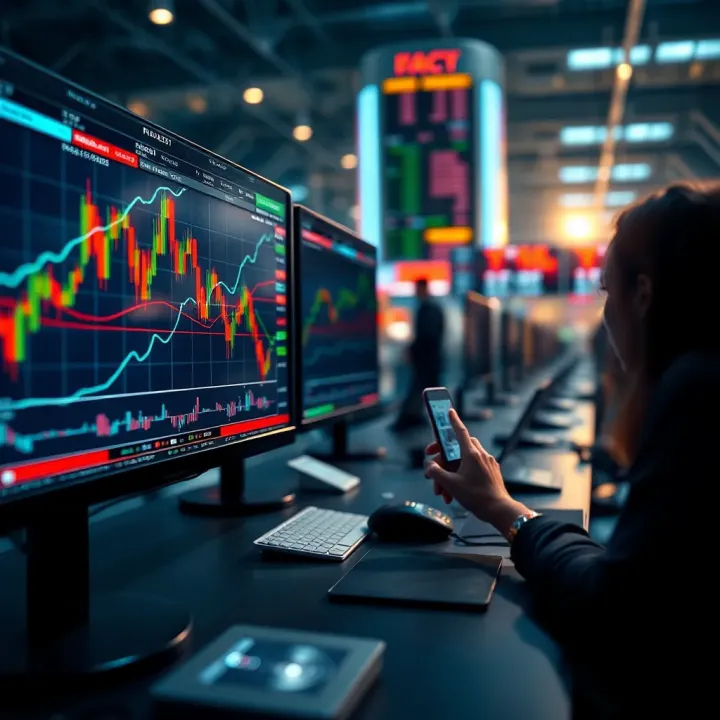
The forex market comprises several major participants:
Central Banks: Reserve Bank of India (RBI) and others intervene occasionally to stabilise the currency or control inflation.
Commercial Banks: They facilitate the majority of forex transactions for clients and proprietary trading.
Hedge Funds and Financial Institutions: Engage in speculative trading to earn profits from market fluctuations.
Corporates: Businesses involved in import-export use forex to hedge against currency risks.
Retail Traders: Individual investors participate mostly through brokers and online platforms.
Forex trading involves exchanging one currency for another, quoted in pairs like USD/INR or EUR/USD. Traders speculate whether a currency pair will strengthen or weaken. For example, if you expect the rupee to gain against the dollar, you would buy INR/USD.
Traders use various methods:
Spot Trading: Immediate exchange of currencies at current market rates.
Forward Contracts: Agreements to exchange currencies at a future date and predetermined rate, often used by corporates.
Futures and Options: Derivative instruments offering leverage and hedging possibilities.
Currency prices react to multiple variables:
Economic Data: GDP growth, inflation, interest rates published by RBI and other central banks.
Political Stability: Elections and geopolitical tensions cause volatility.
Trade Balances: Surpluses or deficits influence demand and supply of currency.
Market Sentiment: Speculative activities driven by news, global events, or rumours.
Trading forex requires understanding these dynamics, not just chasing quick profits. Informed decisions can help avoid pitfalls common among new traders.
This introductory overview sets the stage to explore deeper aspects like trading platforms, strategies, risks, and regulatory environment in India in the following sections.
Understanding the forex trading market lays the groundwork for anyone keen to enter or analyse this space. It clarifies how currency trading operates globally, what drives price movements, and who the key players are. Knowing these basics helps traders and investors avoid costly mistakes and spot genuine opportunities.
Forex trading involves buying one currency while simultaneously selling another. Unlike stock markets, you never trade a single currency in isolation. Instead, currencies are always paired, reflecting how much one currency is worth compared to another. For instance, if the USD/INR pair is quoted at 82, it means one US dollar buys ₹82.
This market is enormous—roughly ₹2 lakh crore worth of currency is traded daily worldwide. Its size makes it extremely liquid and fast-moving, ideal for those looking to profit from currency value changes.
Currency pairs have two parts: the base currency (first) and the quote currency (second). The quoted price shows how much of the quote currency you need to buy one unit of the base currency. For example, if EUR/USD is 1.10, it means one euro costs 1.10 US dollars.
Forex quotes always move in "pips," which are very small price increments. Traders use pips to measure gains or losses precisely. Knowing how to read these quotes helps you understand market movements and place trades more effectively.
The forex market mainly revolves around a few major currencies known as the “majors.” These include the US dollar (USD), euro (EUR), Japanese yen (JPY), British pound (GBP), Swiss franc (CHF), Canadian dollar (CAD), and Australian dollar (AUD). Pairs like EUR/USD, USD/JPY, and GBP/USD see the highest volumes and tightest spreads.
Focusing on major pairs benefits Indian traders because they offer more predictable price action and better liquidity. This means easier entry and exit without sudden price shocks.
Forex operates continuously across different time zones, opening Monday morning in Asia and closing Friday evening in New York. This 24-hour cycle allows traders to respond to global events instantly. For instance, news breaking in Tokyo can affect currency pairs by the time the London market opens.
Understanding this cycle helps in planning trades. You can pick trading hours based on volatility—for example, the overlap between London and New York sessions usually sees higher activity.
Several financial centres dominate forex trading, each hosting major banks, brokers, and financial institutions. London claims the largest share due to its timezone advantage, followed by New York, Tokyo, and Singapore.
Indian traders watch London closely since significant volume flows there impact INR pairs indirectly. Mumbai also serves as a growing regional player during the Asian session.
Forex is the most liquid market globally, thanks to enormous daily turnover. High liquidity means more frequent transactions with minimal price distortion. Traders benefit from tighter bid-ask spreads, reducing trading costs.
Volume varies during the day with peaks at session overlaps or major economic announcements. For instance, RBI policy announcements usually trigger sharp INR movements with increased trading volume. Knowing when liquidity spikes can improve timing and minimise slippage.
Grasping these fundamentals is necessary to navigate forex trading confidently and position yourself for consistent results.
Understanding the key players in the forex market helps you grasp how currency trading functions daily. These participants influence liquidity, pricing, and market opportunities. Knowing who they are clarifies the market’s complexity and can guide better trading decisions.
The interbank forex market forms the backbone of currency trading. This network comprises large banks trading with one another, where most forex transactions happen. These trades involve massive volumes, often exceeding billions of dollars daily, primarily conducted over electronic platforms like EBS and Reuters. For instance, the State Bank of India will deal directly with other banks to manage currency exposure or provide foreign exchange services to clients.
Market makers and liquidity providers are typically major banks or financial firms that offer consistent bid and ask prices for currency pairs. Their presence ensures trades can execute swiftly with minimal price slippage. For traders, this means improved chances of entering or exiting positions at expected rates. Without liquidity providers, forex trading would be slower, less predictable, and more costly.
Retail forex trading has grown rapidly, allowing individual traders to access the market using online platforms. Unlike banks, retail traders usually engage through brokers that offer leveraged trading, meaning you can control larger currency positions with smaller capital. This accessibility has brought retail players into what was once an exclusive space.
Choosing the right broker is critical. Factors such as regulatory approval, spreads, commissions, execution speed, and platform usability affect your trading experience. For example, many Indian traders prefer brokers regulated by the Securities and Exchange Board of India (SEBI) or international firms like ICICI Direct offering forex services under RBI regulations. Picking a trusted broker reduces risks of fraud and ensures smooth order execution.
Central banks, including the Reserve Bank of India (RBI), intervene in forex markets to stabilise their currency or control inflation. Such interventions can cause sudden movements in currency values. They may buy or sell their own currency or adjust interest rates, which impacts forex rates indirectly.
Hedge funds and corporate traders use forex markets for hedging or speculation. Large Indian companies importing goods may hedge currency risk to lock in costs. Meanwhile, hedge funds might speculate on currency changes seeking profits. Their trading volumes can sway sudden trends, creating both opportunities and volatility for other participants.
The forex market's diverse participants—from powerful banks to individual retail traders—all play distinct roles, shaping the market’s liquidity, volatility, and accessibility. Knowing who these players are can help you navigate forex trading with more insight and caution.
Understanding how forex trading operates is essential for anyone eager to participate or analyse this vast market. It involves not only the buying and selling of currencies but also the use of specific platforms, order types, and trading techniques. Mastering these essentials help traders make informed decisions, manage risks effectively, and potentially improve returns.
In forex trading, platforms act as the trader's gateway to the market. Popular platforms like MetaTrader 4 (MT4) and MetaTrader 5 (MT5) are widely used due to their reliability and user-friendly interfaces. These platforms allow traders to access real-time price data, execute trades instantly, and monitor market conditions efficiently. For example, many Indian traders prefer MT4 for its compatibility with local brokers and availability of Indian market time settings.
Charts and technical indicators form another critical component of these platforms. They provide visual insights into price movements and trends. Moving averages, RSI (Relative Strength Index), and MACD (Moving Average Convergence Divergence) are common tools that help identify entry and exit points. Imagine spotting a strong support level just before a price surge; charts guide you to such opportunities, reducing the guesswork involved.
Market orders are straightforward—they execute trades immediately at the current market price. This is useful when traders want to enter or exit positions quickly, especially in a fast-moving market. However, they carry the risk of slippage, where the executed price differs slightly from expected, particularly during volatile periods.
Limit and stop orders offer more control. A limit order triggers a trade at a specified price or better, helpful for entering the market at a desired level without chasing prices. Conversely, stop orders activate when the price reaches a certain point, often used as stop-loss orders to limit losses. For instance, an Indian trader may set a stop-loss on the USD/INR pair to prevent losses beyond ₹1,000 on a trade, effectively managing risk.
Technical analysis relies on price charts and indicators to predict future movements. It suits traders focusing on market patterns rather than economic news. For example, a swing trader might use Fibonacci retracement levels to find potential reversal points within a trend, aiming to capitalise on short to medium-term price swings.
Fundamental analysis looks at economic variables such as GDP, inflation, and interest rates. Consider how the Reserve Bank of India's monetary policy changes can influence the rupee's value against other currencies. Traders following fundamentals might adjust positions based on these developments rather than pure chart signals.
Common trading styles vary from scalping, involving rapid trades capturing small profits, to position trading, where investors hold for weeks or months. Day trading appeals to those who prefer not to hold overnight risks. Understanding your style aligns your strategy with your lifestyle and risk tolerance, improving chances of long-term success.
Effective forex trading hinges on understanding these practical tools and methods. Familiarity with platforms, order types, and strategies empowers you to navigate the market confidently and adapt to its ever-changing nature.
Currencies do not move randomly; various factors shape their prices continuously. Understanding these drivers helps traders and analysts anticipate shifts and make informed decisions. Economic data, policy actions, and market sentiment all play distinct yet interconnected roles.
Gross Domestic Product (GDP) reflects a country’s economic health. A rising GDP usually strengthens a currency as it signals robust growth, attracting investment. For instance, if India reports a higher GDP growth rate compared to other economies, the rupee may appreciate against the dollar. Inflation also affects currency value. High inflation tends to weaken a currency since it reduces purchasing power and may cause central banks to tighten monetary policy. Interest rates set by central banks tie closely with inflation; higher rates often attract foreign capital, pushing currency demand up.
Geopolitical tensions or peaceful resolutions can sway forex markets abruptly. Conflicts increase risk aversion, leading investors to seek safe-haven currencies like the US dollar, Swiss franc, or Japanese yen. For example, during India-Pakistan border skirmishes, the rupee might weaken as investors pull back. Conversely, diplomatic agreements or trade deals can spur confidence in a nation's currency. Traders track these events closely, as timely reaction to news can make a big difference.
The Reserve Bank of India (RBI) shapes the rupee’s course through interest rates, open market operations, and foreign exchange interventions. When RBI hikes rates to curb inflation, it may strengthen the rupee by attracting foreign investments seeking better returns. RBI’s forex reserves management also influences market liquidity, helping stabilise the currency during volatility.
Changes in monetary policy can trigger swift currency moves. If RBI unexpectedly lowers the repo rate, the rupee may weaken as returns decline, making it less attractive to foreign investors. Similarly, policy announcements about capital controls or foreign investment rules can affect perception and flows. Traders often await RBI’s policy statements for cues on near-term currency trends.
Forex markets often move based on how traders feel about future expectations rather than just hard data. Fear and greed, optimism and pessimism shape trading patterns. If traders believe the rupee will strengthen due to improving economic prospects, their buying pushes the currency up—sometimes beyond what fundamentals justify. Keeping an eye on sentiment indicators or news flow is essential to gauge market mood.
Large speculative trades can drive currency moves independently of economic fundamentals. Hedge funds and other big players often place bets based on technical signals or anticipated news. These flows can amplify trends or cause sharp reversals. Retail traders should be aware that speculative volume adds extra volatility, making risk management vital.
Understanding these influences—economic data, policies, and sentiment—enables traders to anticipate forex moves better and manage their strategies effectively.
When trading forex, understanding the risks and taking proper precautions are essential for protecting your capital and ensuring longer-term success. Currency markets are highly volatile by nature, and the use of leverage can amplify both gains and losses. Indian traders should be aware of regulatory frameworks and actively manage risks rather than relying purely on luck or speculation.
Currency price fluctuations are the core risk in forex trading. Exchange rates can swing suddenly on economic reports, geopolitical news, or unexpected events like central bank interventions. For instance, the rupee-dollar rate might fluctuate sharply due to changes in RBI’s monetary policy or geopolitical tensions affecting global trade. Such unpredictability can erode gains or trigger losses if traders don’t monitor the markets closely.
Impact of leverage adds another layer of risk. Forex brokers often offer high leverage, sometimes up to 50:1 or more. This means you can control a large position with a relatively small capital outlay. While this boosts potential profits, it equally magnifies losses. Using high leverage without proper risk management could wipe out your trading account in a short time. Indian traders should assess their risk appetite carefully and avoid excessive leverage, especially in volatile market conditions.
SEBI guidelines for forex trading set the legal framework to protect Indian investors. The Securities and Exchange Board of India (SEBI) regulates forex trading, permitting only trading in currency pairs that include the Indian rupee on recognised exchanges like NSE or BSE. Off-exchange forex trading or trading in pairs without the rupee is not allowed for retail investors. Understanding these rules helps traders avoid illegal or grey-market platforms that carry higher risks.
Avoiding scams and frauds is vital since forex attracts fraudulent schemes promising quick riches. Scammers may operate fake brokerages or signal services designed to steal money. Always verify brokers are registered with SEBI and use established payment gateways. Be cautious if promised guaranteed profits or pressured to invest urgently. Indian traders should rely on trusted sources and avoid sharing sensitive personal or banking information with unknown entities.
Never let the lure of quick profits overshadow your diligence in choosing a safe and legal trading environment.
Stop-loss orders act as safety nets to automatically limit losses when the market moves unfavourably. For example, if you buy USD/INR at ₹75.50 expecting it to rise, setting a stop-loss at ₹75.00 means your position closes if it falls to ₹75.00, capping your loss. This tool enforces discipline and prevents emotional decisions during sudden market swings.
Position sizing means controlling how much capital you risk on each trade. Instead of risking large sums on a single trade, divide your capital into portions and risk only a fixed percentage—often 1-2% per trade. This approach limits the damage from a losing streak and helps preserve your trading funds over time. For example, with ₹1 lakh capital, risking ₹1,000 per trade allows surviving several losses without significant depletion.
By combining these techniques, Indian forex traders can mitigate risks and navigate volatile markets more confidently, balancing opportunities with protection.
📈 Learn how forex trading works in India 🇮🇳, understand currency pairs, key players, market factors, risks, and tips to get started safely in the global market.
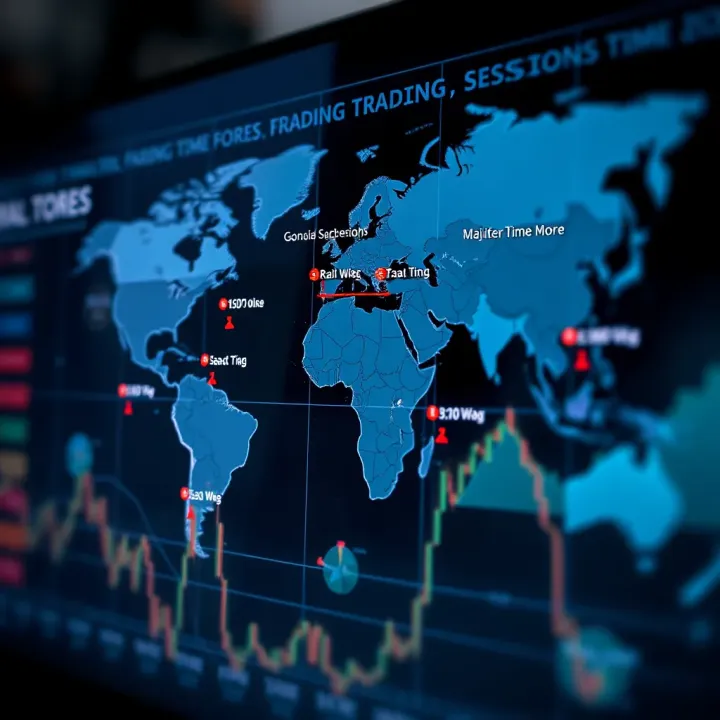
📈 Discover the best time for forex trading in India! Understand how global market hours, currency pairs, and volatility affect your trading success. Manage risks effectively and align trading sessions with your goals.
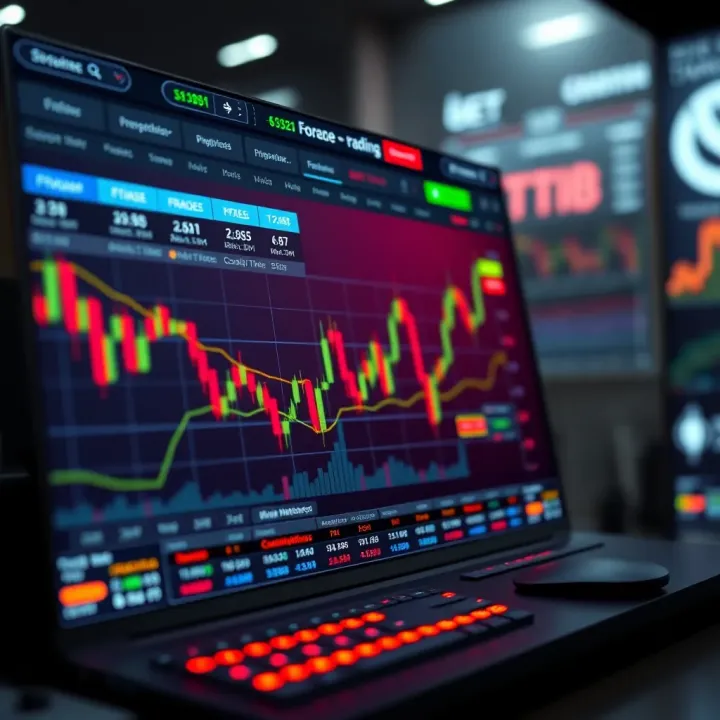
Find the best forex trading platform in India 🇮🇳 by comparing regulations, fees, features, and user experience. Trade securely and effectively with expert tips 📈🔒
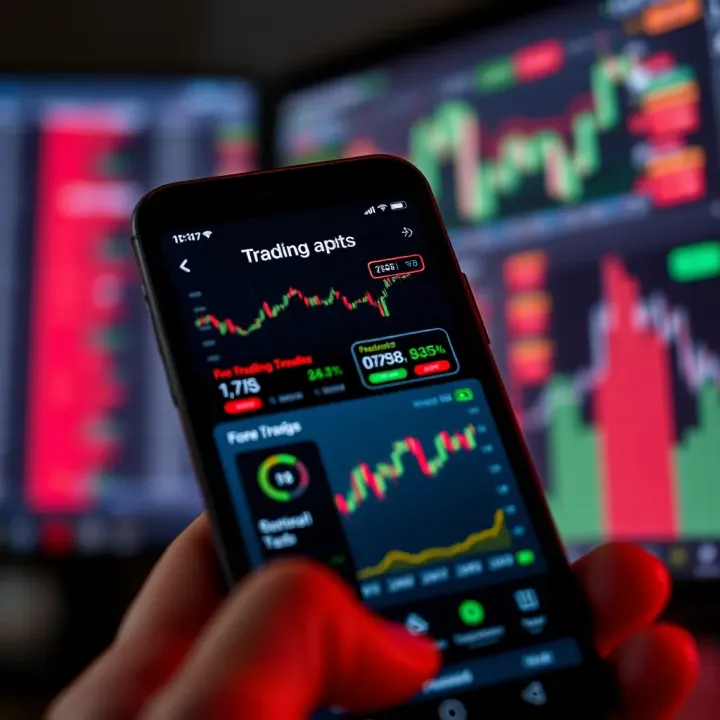
Explore top forex trading apps for Indian traders 📱. Compare features, security, costs & user experience to pick the best platform that suits your trading style.
Based on 13 reviews