

Intraday Trading Charges Explained
Learn about intraday trading charges like brokerage, STT, GST & other fees to manage costs wisely. Use a handy calculator to estimate expenses accurately 📊💹
Edited By
Isabella Foster
Intraday trading involves buying and selling stocks within the same trading day. While it offers quick profit opportunities, traders need to be aware of the various charges that come with it in India. These costs can chip away at your returns if not managed well.
The primary costs include brokerage fees, Securities Transaction Tax (STT), exchange transaction charges, and Goods and Services Tax (GST). Each plays a role in determining your net profit or loss.
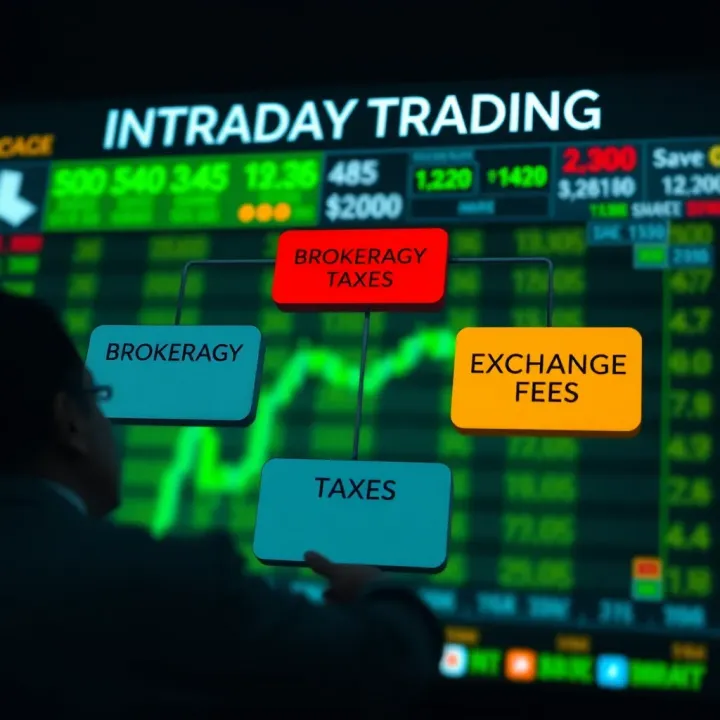
Brokerage fees are the commission paid to brokers for executing buy and sell orders. This varies widely depending on your broker’s model—discount brokers like Zerodha or Upstox often charge a flat fee per trade, whereas full-service brokers might take a percentage of the trade value. For example, a ₹10,000 trade with a 0.05% brokerage rate means paying ₹5.
Securities Transaction Tax (STT) is levied by the government on every sale or purchase of securities on the stock exchange. For intraday equity trading, STT is usually charged on the sell side at 0.025% of the transaction value. This tax is mandatory and non-negotiable.
Exchange transaction charges are fees imposed by stock exchanges like NSE and BSE for operating their platforms. They usually hover around 0.003%–0.005% per transaction.
Goods and Services Tax (GST) applies to the brokerage and transaction charges. Currently, the GST rate is 18%, which means the taxes on your brokerage and exchange fees increase your overall cost.
Managing these charges effectively can make a big difference in your intraday trading profitability. Even if you gain ₹1,000 on a trade, ₹50–₹100 in charges can eat into your profit significantly.
Other miscellaneous charges may include stamp duty (varies by state, typically 0.003% of transaction value) and Securities and Exchange Board of India (SEBI) turnover fees, but these are usually small.
Understanding these costs lets you choose the right broker and plan your trades strategically. Watching the charges closely helps avoid situations where your profits vanish under unexpected fees.
Intraday trading involves buying and selling stocks within the same trading day to profit from price fluctuations. Understanding the charges involved is essential because these costs directly impact your net gains. Unlike long-term investing, intraday trading often involves multiple transactions per day, which means charges can accumulate quickly and eat into your profits if not managed well.
Intraday trading means you open and close a position within the same market session. For example, if you buy 500 shares of Reliance Industries at 2 pm and sell them by 3:30 pm on the same day, that's intraday trading. These trades require quick decisions, higher liquidity, and a keen eye on cost structures to stay profitable. Brokers offer specific plans tailored to such trading styles, often with different fees than regular delivery trades.
The costs involved in intraday trading come from several sources: brokerage fees, Securities Transaction Tax (STT), exchange transaction charges, Goods and Services Tax (GST) on brokerage, stamp duty, and SEBI turnover charges. Each of these can add up to a significant portion of your trade value, especially since intraday trading typically involves high turnover.
For instance, if your brokerage charges 0.05% per trade and you do 20 trades a day, your brokerage alone could reduce profits significantly unless your net gains exceed these costs. Knowing these charges allows you to calculate breakeven points realistically and choose brokerage plans that suit your trading frequency and style.
Effective cost management in intraday trading isn't just about selecting low brokerage charges. It also involves understanding hidden costs like exchange fees and regulatory taxes that add layers to your total expenses.
By comprehending these elements upfront, traders can avoid surprises, optimise trade volumes, and potentially improve net returns. This knowledge benefits everyone, from freshers starting with small capitals to seasoned traders looking to fine-tune their strategies.
In the sections that follow, we'll break down these charges one by one and suggest practical ways to manage them effectively to keep your intraday trading profitable and sustainable.
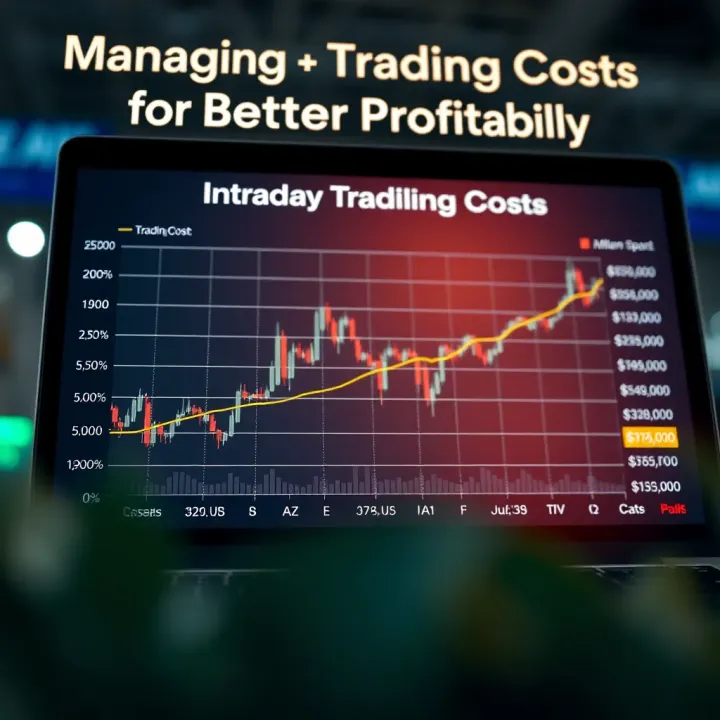
Understanding the different types of charges in intraday trading is key for anyone aiming to trade profitably in India. Each charge affects your overall cost and, ultimately, your net returns. Knowing what you pay and how these fees are structured helps you plan trades better and avoid surprises on your account statement.
Brokerage fees are the payments you make to your broker for executing trades. In intraday trading, brokers usually charge either a flat fee per trade or a percentage of the trade value. For example, a flat fee broker might charge ₹20 per trade regardless of whether you buy stocks worth ₹5,000 or ₹50,000. On the other hand, percentage brokerage means if your rate is 0.05%, a ₹50,000 trade costs ₹25 as brokerage.
Flat fee brokerage works well if you make high-volume trades or small trades frequently, as it keeps costs predictable. Percentage brokerage might be better for low trade volumes or larger trades, but can get expensive if trade sizes grow. Evaluating your trade size and frequency helps choose the best structure.
India’s rise in discount brokers like Zerodha, Upstox, and Groww has shaken up the scene. Discount brokers offer low-cost flat fee or zero brokerage models that cut your trading costs significantly. They primarily focus on trade execution directly via online platforms, without added advisory or research services.
Full-service brokers, such as ICICI Direct or HDFC Securities, charge higher brokerage percentages but provide research, recommendations, and personalised service. For serious intraday traders relying mostly on quick execution and low cost, discount brokers are often preferred. But if you want guidance alongside trading, full-service brokers remain relevant.
Securities Transaction Tax (STT) is a government levy on securities transactions done on stock exchanges. For intraday equity trades, STT is applicable only on the sell side at 0.025% of the transaction value. This means if you buy shares worth ₹1 lakh and sell the same on the same day, STT applies on the selling amount only.
This tax helps keep transactional equity trading transparent and is non-negotiable. Since STT directly reduces your profit margin, active intraday traders should factor it into their cost calculations.
STT calculations are straightforward. Suppose you sell shares worth ₹2 lakh in an intraday trade, you pay 0.025% of ₹2 lakh = ₹50 as STT. Though small per trade, STT adds up over many transactions, so traders frequently trading at high turnover should keep track of cumulative STT paid.
Both major Indian stock exchanges — National Stock Exchange (NSE) and Bombay Stock Exchange (BSE) — levy transaction charges for trade execution on their platforms. These charges cover operational costs and infrastructure.
Traders pay a small fee per ₹₹ of turnover, usually ranging between ₹20 and ₹25 per ₹1 crore turnover, depending on the exchange. This cost appears on your billing but is often less prominent compared to brokerage or taxes.
Exchange transaction charges apply on every buy and sell trade you make. Frequent traders with daily high turnover see these charges accumulate quickly. Although individual charges are low, efficient brokers often negotiate bulk discounts or pass on lower rates to customers, so choosing the right broker can impact your costs here.
Goods and Services Tax (GST) at 18% is charged on brokerage fees. If your brokerage is ₹20 per trade, GST adds ₹3.60, making total ₹23.60. GST is applicable only on the brokerage component and not on STT or exchange fees.
This tax is applicable across all brokers and adds to the trading cost, so consider GST while comparing brokerage plans.
GST increases your trading expenses indirectly, especially if you trade multiple times a day. For instance, if your brokerage fee is ₹100 per day, GST raises it to ₹118, affecting liquidity and net gains. While GST is unavoidable, discount brokers often keep brokerage low enough that GST impact remains manageable.
Keeping an eye on every charge—from brokerage, STT, to exchange fees and GST—helps you trade smartly and maximise your intraday profits. Simple awareness can save hundreds or thousands of rupees over months of active trading.
In addition to brokerage, Securities Transaction Tax (STT), and other well-known fees, traders must account for several other charges in intraday trading. These include Stamp Duty and SEBI Turnover Charges, both of which can impact the net profitability, especially for active intraday traders. Understanding these costs and their practical implications helps traders plan better and avoid surprises.
Stamp duty is a state-level tax levied on the sale and purchase of securities. Each state in India may impose different rates for stamp duty, which can range from 0.005% to 0.015% of the transaction value. For example, Maharashtra currently charges 0.005% on intraday equity trades, while Karnataka imposes 0.01%. This variation means that where the broker's registered office or the investor's residence is located can affect the total stamp duty paid.
Traders should clarify from their broker about the applicable stamp duty based on their state to get an accurate assessment of charges.
The stamp duty is ultimately borne by the trader, although the broker is responsible for collecting and remitting this to the government. Since the charges are calculated on the transaction value, they add to the overall cost of each trade. For frequent intraday traders executing multiple trades, this duty can accumulate notably and slightly chip away at daily profits.
SEBI turnover charges are regulatory fees imposed by the Securities and Exchange Board of India (SEBI) on every transaction made on stock exchanges. These charges help cover the costs of market regulation and surveillance.
Currently, SEBI turnover charges are ₹10 for every ₹1 crore of turnover, which effectively means a very small percentage. Despite being nominal individually, these charges can add up for traders with very high turnover. They apply to both buy and sell transactions and must be accounted for in the trader’s total cost calculations.
For instance, if a trader executes intraday trades worth ₹50 lakh in a day, the SEBI turnover charge would be calculated as:
Turnover = ₹50,00,000 SEBI Turnover Charges = (₹10/₹1,00,00,000) × ₹50,00,000 = ₹5
Over a month, if the daily turnover averages similar amounts, these small charges accumulate. Traders often overlook SEBI turnover charges, but for very high-frequency intraday trading, it’s wise to consider them for precise cost-to-profit assessments.

By factoring in these other applicable charges — Stamp Duty and SEBI turnover charges — traders get a complete picture of the costs involved. This awareness helps in realistic profit calculation and better trade planning to maintain overall profitability.

## How Charges Affect Intraday Trading Profitability

Intraday trading involves multiple charges that directly reduce the profitability of a trade. Understanding the impact of these costs on margins and net returns is vital. Small differences in brokerage fees, taxes, or exchange charges can quickly eat into profits, especially when trades rely on tight margins.

### Impact on Margins and Net Returns

Consider a trader who buys and sells shares worth ₹1,00,000 within the same day. If the brokerage is 0.05%, the STT (Securities Transaction Tax) is 0.025% on the sell side, exchange transaction charges and SEBI turnover fees add up to roughly 0.01%, and GST at 18% applies on brokerage, the total cost may sum up to nearly ₹200. This reduces the net profit substantially.

For example, if the trader aims for a gain of ₹500 on the transaction, the charges consume 40% of that. Such an impact shows why intraday traders must factor in all costs when setting target profits and stop-loss levels.

#### Strategies to Minimise Costs

Reducing the frequency of trades or increasing trade size can help spread fixed charges over more substantial volume, lowering the cost per transaction. Traders must also select brokers whose brokerage models suit their trading style — for example, a flat fee per trade might be cheaper for high-frequency traders than percentage-based charges.

Other ways include using technology-enabled platforms that offer lower charges, automating trades to avoid mistakes, and reviewing state-wise stamp duty rules to minimise stamp duty costs where possible.

### Comparing Charges Across Brokers and Exchanges

#### Choosing Cost-Efficient Brokers

Not all brokers charge the same. Some full-service brokers levy higher brokerage fees but provide research and advisory services. Discount brokers like Zerodha, Upstox, or Angel One offer significantly lower rates, often with flat fees regardless of trade size.

When comparing brokers, consider the entire cost spectrum—brokerage, GST, turnover charges—and factor in the trading platform's reliability, ease of use, and customer support.

#### Considering Service Quality vs Charges

While low charges are appealing, they might come with trade-offs like slower order execution, limited product offerings, or less robust customer service. Unreliable platforms can cause slippage or order failures, ultimately costing more.

Therefore, traders must strike a balance between cost and service quality, especially if they rely on quick decisions and flawless execution. Sometimes paying slightly higher charges for an efficient platform and timely support is better for long-term profitability.

> Intraday trading can magnify small costs to significantly impact profitability. Careful assessment of each charge and broker choice can help traders keep more gains in their pocket.

## Tips to Manage and Reduce Intraday Trading Charges

Managing charges effectively can make a significant difference in your intraday trading profitability. Since these charges eat into your margins, traders must focus on strategies that keep costs low while maintaining trading efficiency. Practical steps such as picking the right brokerage plan, optimising trade frequency, and using technology smartly help control expenses without compromising performance.

### Selecting the Right Brokerage Plan

**Evaluating Brokerage Models**
Brokerage fees vary widely, and understanding different models is key. Full-service brokers generally charge a percentage of turnover, which might become expensive for frequent intraday traders. On the flip side, discount brokers offer flat-fee plans, sometimes as low as ₹20 per trade, which works well if you trade heavily during the day. For example, if you place 10 trades daily with a full-service broker charging 0.05%, the costs can add up quickly compared to a flat ₹20 per trade from a discount broker. Choosing the model aligning with your trade volume and size cuts unnecessary expenses.

**Negotiating for Better Rates**
Don't hesitate to negotiate brokerage charges, especially if you demonstrate consistent trading volumes. Brokers may offer customised plans or loyalty discounts. For instance, a trader who consistently trades ₹10 lakh daily might get their brokerage reduced from ₹20 to ₹15 per trade. Building a good relationship with your broker often pays off in cost savings. Always review your statements and ask for reductions or special offers periodically, as rates can fluctuate or new plans may become available.

### Optimising Trade Frequency and Volume

**Balancing Trade Size and Costs**
Trading too many small orders can multiply fixed charges quickly, eroding profits. Instead, consolidate trades when possible to reduce the number of transactions. Suppose you split ₹1 lakh worth into five trades instead of one; you might pay five times the brokerage fees. Balancing trade size thoughtfully helps keep charges minimal without losing market opportunities.

**Avoiding Excessive Turnover Charges**
Turnover-based charges like Securities Transaction Tax (STT), exchange fees, and SEBI turnover charges escalate with high trade volume. Traders should monitor total turnover and avoid unnecessary round-trips. For example, flipping the same stock multiple times within hours might increase STT and exchange costs unnecessarily. Planning trades strategically and avoiding impulsive moves can control turnover charges effectively.

### Using Technology for Cost Efficiency

**Trading Platforms with Lower Charges**
Different technological platforms come with distinct fee structures. Many discount brokers provide user-friendly mobile apps that levy low brokerage and zero platform fees. For instance, platforms like Zerodha or Upstox are popular choices in India due to their competitive pricing and easy interfaces. Selecting technology that aligns with your trading pattern reduces hidden costs and improves execution speed.

**Automating Trade Execution**
Automation tools like algorithm-based trading or smart order routing can lower costs by executing trades at optimal prices quickly. Automating repetitive tasks reduces slippage and missed opportunities, which indirectly saves money. Even simple order triggers limit overtrading, helping you stick to a plan and avoid excessive turnover-related charges. Using these tools wisely means sharper execution and potentially lower overall expenses.

> Smart management of intraday trading charges not only preserves your gains but also boosts confidence by removing cost-related uncertainties. Understanding and applying these tips will surely help you trade more profitably in the Indian markets.

## Regulatory Landscape and Future Trends in Intraday Trading Charges

Understanding the regulatory framework governing intraday trading charges is vital for any trader or investor in India. The Securities and Exchange Board of India (SEBI) and stock exchanges like NSE and BSE play a key role in setting and monitoring these charges. Knowing the regulatory environment helps traders anticipate changes that may affect trading costs and plan their strategies accordingly.

### Role of SEBI and Exchanges in Regulating Charges

#### Recent Regulatory Changes

SEBI has tightened regulations around brokerage disclosures and transaction levies in recent years. For example, SEBI mandated clearer brokerage fee structures, preventing brokers from hiding extra costs in fine print. Exchanges have also adjusted transaction charges to align with market conditions and volume trends, occasionally subsidising costs to encourage liquidity.

These changes matter because they bring a fairer playing field for small and retail traders, helping them understand the true cost of intraday trades rather than facing unexpected fees. For instance, NSE recently revised its exchange transaction charges based on turnover slabs, which impacts how traders calculate net margins.

#### Consumer Protection Measures

SEBI has introduced several measures to safeguard traders from unfair practices related to charges. Brokerages must now provide detailed contract notes showing taxes, fees, and charges explicitly. This transparency makes it simpler for traders to verify bills and contest discrepancies.

Additionally, SEBI mandates investor education programmes aimed at making traders aware of hidden costs and how to minimise them. Such initiatives ensure that new entrants to intraday trading grasp not only market risks but also the impact of expenses on profitability.

### Emerging Trends and Impact on Traders

#### Possible Reduction in Brokerage Fees

With growing competition among discount brokers and online trading platforms, brokerage fees have been steadily decreasing. Many brokers now offer zero brokerage on intraday equity trades to attract clients, relying on other revenue sources like margin funding.

This trend benefits traders by lowering the breakeven level, allowing even small trades to potentially yield profits. For instance, Zerodha and Upstox offer flat or zero brokerage models, especially appealing to young and tech-savvy traders focusing on volume but cautious of fees.

#### Increasing Transparency in Charges

Advancements in technology have also led to greater clarity in how charges are presented to traders. Real-time updates on brokerage, taxes, and exchange fees are becoming standard on trading apps. This helps traders make on-the-spot decisions with full knowledge of cost implications.

Moreover, regulatory push for uniform billing standards means traders can compare brokerage plans more easily and pick ones that suit their trading style and size. This clarity reduces surprises and encourages more disciplined trading habits.

> Staying aware of regulatory updates and emerging trends allows traders to control their costs better and enhance intraday trading profitability over time.Learn about intraday trading charges like brokerage, STT, GST & other fees to manage costs wisely. Use a handy calculator to estimate expenses accurately 📊💹

📈 Learn how intraday trading works in India, covering essential strategies, risks, tools, and Indian tax rules to trade stocks wisely with confidence and clarity.
📈 Learn intraday trading essentials: key strategies, tools, risks, and Indian regulations to help beginners trade confidently within the same day market swings.

📈 Discover the best hours for intraday trading in India with insights on NSE & BSE sessions, volatility trends, economic cues, and smart risk management tips.
Based on 15 reviews