
Understanding Intraday Trading Basics
📈 Learn intraday trading essentials: key strategies, tools, risks, and Indian regulations to help beginners trade confidently within the same day market swings.
Edited By
Emily Thompson
Intraday trading revolves around buying and selling stocks within the same trading day, aiming to profit from short-term price movements. In India, this approach demands quick decision-making, sharp analysis, and strict discipline due to the volatile nature of markets.
To succeed, traders must first select stocks that show enough liquidity and volatility. For example, large-cap stocks like Reliance Industries and HDFC Bank often provide both, making them favourites among intraday traders. Monitoring the stock's trading volume is vital; a surge in volume can indicate upcoming price shifts.
Technical analysis forms the backbone of intraday trading strategies. Common tools include moving averages, Relative Strength Index (RSI), and candlestick patterns. For instance, a trader may use the 15-minute moving average crossover to time entry and exit points effectively.
Risk management cannot be overlooked. Most experts advise risking only about 1% of one’s total capital per trade. Stop-loss orders help limit losses in case the market moves against the position. Suppose you buy shares at ₹2,000 expecting short-term gains; placing a stop-loss at ₹1,960 limits your loss to ₹40 per share, protecting your capital from bigger dips.
Emotional control plays an equal role. Intraday trading can get stressful, especially during quick market swings. Setting predefined targets and sticking to trading plans reduces chances of impulsive decisions. Traders must accept losses as part of the process instead of chasing losses.
Successful intraday trading depends on a blend of careful stock selection, effective technical analysis, disciplined risk management, and emotional steadiness.
By focusing on these practical aspects, traders can approach the Indian stock market with better preparedness, increasing their chances of daily profitability.
Understanding intraday trading in the Indian market forms the backbone for anyone hoping to profit from daily price changes in stocks. This type of trading involves buying and selling a security within the same trading day. The goal? To capitalise on small price fluctuations before the market closes, locking in gains or cutting losses early.
Intraday trading focuses on short-term moves in stocks listed on Indian exchanges like the National Stock Exchange (NSE) and Bombay Stock Exchange (BSE). Unlike long-term investing, which relies on fundamentals and holds assets for months or years, intraday traders react quickly to market signals, news, and price trends within a few hours or minutes. For instance, a trader might buy shares of Reliance Industries at 10:30 am and sell them by 2:30 pm after a quick jump driven by a sector-related announcement.
The scope for intraday trading in India is significant due to the high liquidity and active participation in NSE and BSE. Its practical relevance lies in the possibility of generating daily income, but one must be aware of the risks associated with rapid decision-making and price volatility.
What separates intraday trading from long-term investment is mainly the time horizon and strategy. Intraday traders close all positions before the market shuts to avoid overnight risk, while long-term investors focus on company growth, dividends, and macroeconomic trends. Long-term investment cushions volatility but requires patience; intraday is faster but demands constant monitoring.
India’s regulatory bodies, notably the Securities and Exchange Board of India (SEBI), influence intraday trading practices strictly to maintain transparency and investor protection. For example, SEBI enforces margin requirements and position limits that ensure traders have adequate capital backing their intraday positions, reducing excessive speculation.
Furthermore, the exchanges impose penalties for illiquid trades and protracting open positions past the trading day to discourage misuse. These rules shape how traders operate, making compliance essential to avoid penalties and leverage risks wisely.
The NSE and BSE operate official trading hours from 9:15 am to 3:30 pm, Monday through Friday. This window is the main arena for intraday traders. Market activity peaks around the opening and closing hours, making them prime periods for spotting price movements.
Volatility tends to be highest during the first 30 minutes and the last 30 minutes of trading. This is when traders digest overnight news and position themselves before settlement respectively. An intraday trader might find strong opportunities around 9:15 am, as fresh orders flood in, or near 3:00 pm when traders adjust portfolios.
Pre-market sessions (usually 9:00 am to 9:15 am) allow traders to gauge market sentiment but without actual execution. Post-market hours (3:40 pm to 4:00 pm) help settle deals but are less liquid and recommended only for experienced traders who understand the risks of thin trading volumes during these times.
Knowing the exact timings and characteristics of each trading session helps intraday traders plan entries and exits better, minimise losses, and seize short-term opportunities efficiently.
Choosing the right stocks and sectors makes a big difference in intraday trading success. Not every stock fits the fast-paced nature of day trading—liquidity, volatility, and sector activity all matter. Focusing on these aspects helps you avoid getting stuck with hard-to-sell shares or low price movement, both of which can eat into your profits.
Liquidity refers to how easily a stock can be bought or sold without affecting its price. In intraday trading, high liquidity is essential because it means you can enter and exit positions quickly and at desired price points. For example, stocks like Reliance Industries or HDFC Bank consistently have high daily volumes on NSE and BSE, which makes them popular among day traders.
Without good volume, the bid-ask spread widens, increasing trading costs. Also, low liquidity stocks often see erratic price jumps—that’s risky when your trades last only hours. So, prioritise stocks where millions of shares are exchanged daily; this smooths trades and reduces slippage.
Volatility refers to how much a stock's price fluctuates within a short time. For day trading, you need stocks with enough price movement to make profits from small swings. For instance, IT stocks like Infosys and Wipro often show steady volatility, providing reliable opportunities for intraday scalping.
However, a point to remember is that excessive volatility might increase risk, leading to sharp losses if you misread the market. Observe how a stock behaves historically during sessions—the hours just after market open and before close usually see the highest volatility.
Stocks react swiftly to corporate news, government policies, or sectoral shifts. For example, a sudden RBI announcement on interest rates can trigger sharp moves in banking stocks like ICICI Bank or SBI. Traders who keep tabs on real-time news feeds can capitalise on such events.
It’s practical to avoid stocks prone to unexpected news if you prefer steadier trades. However, news-based intraday strategies work well if you have quick decision-making and risk control in place.
The banking sector is the backbone of the Indian stock market, offering liquidity and volatility ideal for intraday traders. Stocks such as HDFC Bank, Kotak Mahindra Bank, and Axis Bank are frequently active during market hours due to regular flows of economic data, RBI policies, and corporate results.
Such stocks respond in almost real-time to market sentiments, making them good picks for traders seeking quick profits over short periods.
IT firms, including Infosys, TCS, and Tech Mahindra, often feature predictable intraday price movements influenced by global tech trends, quarterly earnings, and currency fluctuations (especially USD to INR). These factors create opportunities to capture momentum within the trading day.
Their moderate volatility and good liquidity balance risk and reward for intraday players.
Companies in sectors like oil, gas, and commodities, for example, ONGC, Reliance, and Tata Steel, react sharply to international commodity prices, government policies, and weather-related events.
These stocks can be quite volatile on days when crude prices or metal futures swing, providing good momentum-based trading chances. However, price moves can be sudden and sharp, so strict risk management is necessary.
Selecting the right stocks and sectors for intraday trading helps you trade efficiently with better price execution and manageable risks. This step forms the foundation of any effective trading strategy.
By focusing on liquidity, volatility, and sector-specific traits, traders can refine their watchlist to the most promising candidates for daily profits. Keeping an eye on news and economic indicators further sharpens this process, ensuring you are ready for fast market moves.
Technical analysis is central to successful intraday trading, especially in the fast-paced Indian markets. It helps traders understand price movements, identify patterns, and make data-driven decisions quickly. By relying on tools like charts, indicators, and oscillators, traders can spot trends and reversals before they become apparent to the wider market.
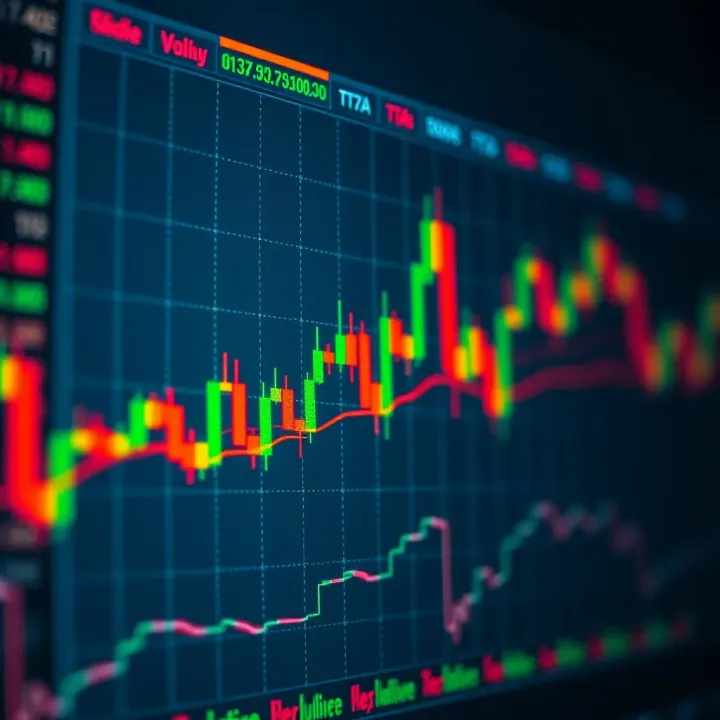
Candlestick charts display price action in a clear visual format, showing open, close, high, and low prices within a given time frame. For day traders, patterns such as the "Doji," "Hammer," and "Engulfing" hold importance because they signal potential reversals or continuations during the trading session. For example, a Hammer appearing near support might hint at a bounce-back, prompting traders to enter a quick buy position.
These patterns are useful because they reflect market psychology instantly. In the Indian stock market, combining candlestick analysis with volume data can reveal if a move has strength behind it—key for entering or exiting trades within hours.
Support and resistance levels act as invisible boundaries where price movement tends to pause or reverse. Identifying these levels on intraday charts helps traders set realistic entry and exit points. For instance, if a stock like Reliance Industries hits a strong resistance at ₹2,500 during the day, many traders might short-sell near that price expecting a retreat.
Support levels work similarly, representing floor prices where buying interest arises. In intraday trading, these levels are often drawn using previous intraday highs and lows or pivot points. Watching these levels helps prevent chasing prices beyond what’s sustainable in a single session.
Trend lines connect consecutive higher lows in an uptrend or lower highs in a downtrend, providing visual cues on price direction. Intraday traders use these lines to judge if the trend remains intact or if it’s about to reverse. For example, a break below an ascending trend line in TCS stock could signal a short-term sell-off.
Chart formations like flags, pennants, and triangles also matter as they suggest brief consolidation before continuation or reversal. Spotting a symmetrical triangle forming within the trading day allows traders to anticipate a breakout and position accordingly. Hence, understanding these formations brings timing precision.
Moving averages smooth out price data by averaging a stock’s price over a specific time, making trends easier to spot. In intraday trading, short-term MAs such as the 9-period and 21-period are popular. When the faster MA crosses above the slower one, it signals upward momentum, prompting buys. The reverse signals a downtrend.
For instance, on the NSE Intraday chart of Infosys, seeing a 9-period MA cross above the 21-period MA early in the session might encourage traders to enter long positions. MAs also serve as dynamic support or resistance during the day.
RSI measures the speed and change of price movements, indicating if a stock is overbought or oversold on a scale of 0 to 100. Generally, an RSI above 70 means the stock may have risen too quickly and could correct soon, while below 30 signals a possible rebound.
In intraday contexts, traders monitor RSI swings to spot potential reversals. For example, if Tata Steel’s RSI enters oversold territory in mid-session, it might be a cue to consider buying before a bounce.
Bollinger Bands consist of a moving average flanked by upper and lower bands indicating volatility. When the bands tighten, it means low volatility and traders watch for a breakout. An intraday breakout beyond the upper band in a volatile stock like Adani Ports often leads to swift moves, ideal for scalpers.
Volume indicators track the number of shares traded and confirm the strength of price moves. Higher volume on a breakout supports the validity of that move. On the other hand, low volume might suggest a false breakout, helping traders avoid traps.
Using these technical tools together improves accuracy. For example, entering a trade when a bullish candlestick forms near support, RSI is rising from oversold, and volume surges increases the probability of a profitable intraday move.
These techniques allow intraday traders in India to respond quickly, manage risks effectively, and take advantage of short-term price fluctuations.
Successful intraday trading in the Indian market demands strict risk management and unwavering discipline. Without these, even the best strategies can lead to significant losses. Traders must protect their capital first and foremost, balancing potential profits against manageable risks. This section breaks down key elements such as stop-loss strategies, position sizing, and the psychological strength needed to trade consistently.
A stop-loss order acts like a safety net to halt losses before they become crippling. In volatile Indian markets, prices can swing sharply within minutes. For instance, if you buy a stock at ₹400 expecting a quick gain, placing a stop-loss at ₹380 limits your loss to ₹20 per share. Without this, sudden adverse moves can wipe out much more, draining your trading capital.
Defining realistic profit targets goes hand-in-hand with stop-loss settings. Aiming for a profit of ₹50 in the same trade can be tempting, but setting achievable expectations—say ₹30 to ₹40—aligns better with typical intraday price swings. This avoids chasing unlikely gains and helps lock profits efficiently.
As the trade unfolds, adjusting stop-losses protects your gains. If the stock rises to ₹420, moving your stop-loss to ₹400 secures at least a breakeven point. This “trailing stop” helps you ride a winning trade while guarding against sudden reversals, a smart move in fast Indian equity markets.
Your capital allocation must reflect how much risk you’re willing to bear. For example, a trader with ₹2 lakh capital might decide to risk only 1% per trade, i.e., ₹2,000. This limits the amount lost in a single trade, preserving your overall corpus for future opportunities.
Limiting exposure per trade avoids big surprises. Placing large positions on volatile stocks like banking shares during RBI policy announcements can be risky. Instead, spreading investments across smaller, less volatile trades keeps the portfolio balanced and avoids margin calls or forced exits.
Avoiding overtrading and emotional decisions is equally critical. It’s tempting to jump into trades after a loss to recover quickly, but this impulsiveness often worsens results. Setting daily trade limits and sticking to them helps maintain rational judgement.
Volatile markets can rattle traders, making emotional control essential. For example, the volatility around monsoon forecasts affecting agro-based stocks can lead to knee-jerk reactions. Staying calm avoids rash decisions like exiting a position prematurely.
Building patience and discipline helps you stick to your trading plan. Discipline means not chasing trades without good setups and resisting the urge to break rules just because the market moves quickly.
Finally, learning from losses is key to improvement. Every mistake, like ignoring a stop-loss or misreading a chart pattern, becomes valuable experience when analysed properly. Keeping a trading journal and reviewing decisions regularly can prevent repeat errors and improve your strategy.
Managing risk and emotions are not optional in intraday trading—they are foundational to long-term success in India’s fast-moving stock markets.
By mastering these risk and discipline aspects, you stand a better chance of converting intraday trades into consistent profits.
Developing a personal intraday trading plan is essential for success in the fast-paced Indian stock market. It gives you a clear roadmap to handle market swings, reduces emotional decisions, and improves consistency. Without a plan, traders often fall prey to impulsive trades, risking precious capital. A well-structured plan aligns your actions with your risk tolerance and trading style, making day-to-day operations smoother.
Setting daily profit and loss limits helps keep your trading under control. For instance, if you decide on a daily loss cap of ₹10,000, you’ll automatically stop trading once losses hit that figure. This prevents catastrophic setbacks and preserves capital for better opportunities. Similarly, having a realistic daily profit target lets you exit on time instead of chasing uncertain gains that could vanish in minutes.
Choosing scalping, momentum, or breakout trading styles depends on your preferences and market behaviour. Scalping involves quick trades lasting seconds or minutes, aiming for small profits multiple times daily. Momentum trading targets stocks with strong trends, riding their price moves for a few minutes to hours. Breakout trading waits for stocks to cross key support or resistance levels before entering, expecting larger price swings. Each style suits different risk appetites and time commitments, so pick one that matches your temperament.
Timing entry and exit points effectively can make or break a trade. Successful intraday traders watch for optimal moments like the first 30 minutes after market open when volatility peaks or moments just before major economic announcements. Good timing also means avoiding the midday lull when volume often thins. Using technical signals like moving average crossovers or RSI shifts can help pinpoint entry and exit more objectively, reducing guesswork.
Features to look for in a trading terminal include real-time data, advanced charting tools, and user-friendly interface. For example, Zerodha’s Kite platform allows quick switching between multiple charts and indicators, crucial for spotting patterns fast. Connectivity stability is another key; a laggy terminal can cause missed trades or delayed decisions costing money.
Automated alerts and order execution speed play a big role in intraday trading. Alerts notify you when a stock hits a certain price or RSI level, so you don’t have to stare at screens nonstop. Fast order execution prevents slippage—buying or selling at a less favourable price than intended—especially vital during sharp market moves. Many Indian brokers offer APIs and algorithmic trading features to improve precision.
Mobile trading considerations for intraday traders matter as markets move quickly even when you’re on the go. Apps with simple navigation, reliable push notifications, and quick order placement allow you to act immediately from anywhere. For instance, Upstox and Angel Broking apps provide smooth mobile experiences with features like one-click order placement and instant fund transfers, helping active traders stay connected and responsive.
A personal trading plan is your anchor amid market storms. Combining clear goals, suited strategies, and the right tech tools greatly improves chances of consistent profits while protecting against unforeseen risks.
📈 Learn intraday trading essentials: key strategies, tools, risks, and Indian regulations to help beginners trade confidently within the same day market swings.

📈 Discover the best hours for intraday trading in India with insights on NSE & BSE sessions, volatility trends, economic cues, and smart risk management tips.
📈 Master intraday trading in India with our practical guide! Learn market basics, strategies, risk control & tools to trade confidently within the same day.
📈 Discover proven intraday trading strategies for Indian markets. Learn key techniques, risk control, and tips to optimise same-day trading profits effectively.
Based on 10 reviews