

Best Paper Trading Sites for Indian Investors
📈 Explore the best sites for paper trading in India to practise stock trades risk-free. Build skills, test strategies, and gain confidence before real market investing.
Edited By
Jacob Wright
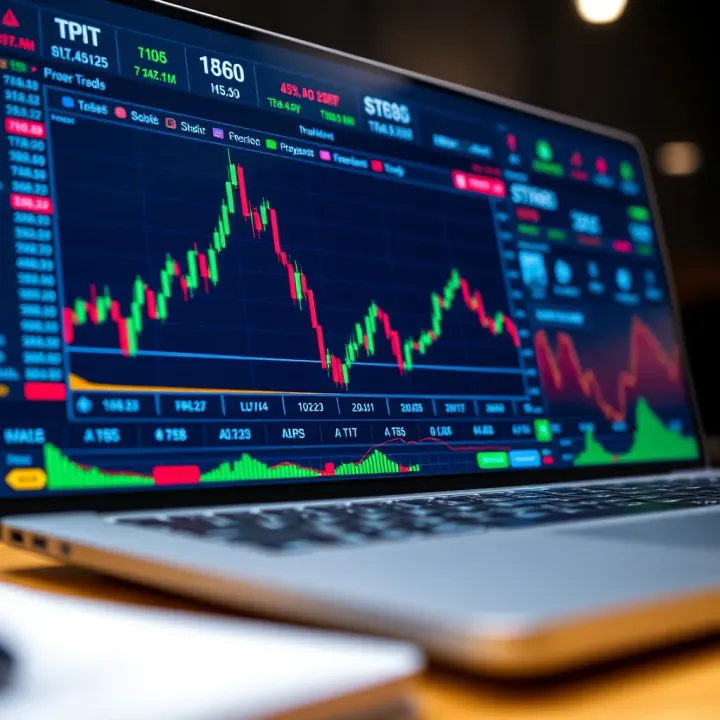
Paper trading offers Indian investors a valuable chance to practise trading without risking real money. It replicates live market conditions, allowing users to buy and sell stocks, commodities, or currencies in a simulated environment. This hands-on experience can help traders sharpen their skills, test strategies, and gain confidence before moving to real investment.
For anyone starting in the stock market or complex derivatives, paper trading is like a dress rehearsal. You learn to interpret market trends, place orders, and manage risks without the pressure of financial loss. In India, with platforms becoming familiar and user-friendly, paper trading is more accessible than ever.

Different platforms offer varied features such as real-time data, customisable portfolios, interactive charts, and mobile compatibility. Choosing the right paper trading site makes a big difference in learning effectively. Look for systems that mirror the Indian stock exchange environment, including live Sensex and Nifty indices, to get accurate simulation.
Practising trades on paper trading platforms allows you to make mistakes and learn from them without facing financial consequences—essential for building strong trading habits.
Key benefits of paper trading include:
Risk-free environment to test various trading strategies
Familiarity with platform functions and order types
Understanding market volatility and timing
Building discipline in decision-making
With multiple options available—from broker-inclusive simulators by Zerodha and Upstox to standalone software—Indian investors must evaluate their needs carefully. Decisions should weigh interface ease, market coverage, data accuracy, and whether the platform supports stocks only or commodities and currencies as well.
This guide will simplify the process of selecting a paper trading site tailored to Indian stock market investors, helping you invest smartly when you eventually enter the live market.
Paper trading is a simulation of real trading where investors practise buying and selling stocks, commodities, or currencies using virtual money. It replicates market conditions without involving actual financial risks. For Indian investors, this approach offers a safe environment to learn and experiment before stepping into live markets.
Unlike theoretical study, paper trading provides hands-on experience. Imagine practising driving in a simulator before taking the wheel on the road—that's paper trading for markets. It helps develop essential trading skills such as order placement, timing, and analysing price movements.
Paper trading mimics the real trading process but with virtual funds. You place trades on an online platform that simulates the market, tracking gains and losses without repercussions on your wallet. For example, you might trade shares of Reliance Industries or Tata Motors using virtual money to see how your decisions would fare.
This process allows you to understand market mechanics like bid-ask spreads, price changes, and order types. It’s particularly useful in volatile markets or when trying unfamiliar instruments such as derivatives.
The key difference lies in the absence of real financial consequences in paper trading. Live trading involves real money where emotions like fear and greed affect decisions. Paper trading, meanwhile, provides a stress-free setting to build skills without pressure.
However, paper trading cannot fully mimic conditions like slippage, liquidity issues, or emotional responses during actual losses. Despite this, it remains a valuable step to reduce mistakes when moving to live trading.
For beginners, the greatest advantage is the freedom to learn without risking capital. You might try trading Nifty futures or buying shares in Infosys without worrying about losing money. When mistakes happen, they don’t hurt your finances but serve as lessons.
Experienced traders can use paper trading to test new strategies before using them in real markets. For instance, you could experiment with intraday strategies or options combinations. Observing how these perform helps refine tactics while avoiding costly errors.

Confidence often determines trading success. Paper trading helps build this by familiarising you with market timing, order execution, and strategy management. Once comfortable with simulated trades, transitioning to real investments feels less daunting, reducing hesitation and impulsive decisions.
Paper trading is not just a practice tool—it's a bridge between theory and real market action, helping Indian investors gain valuable experience safely.
Investors who use paper trading wisely tend to approach live markets with better preparation and a clearer understanding of risks and rewards, improving their chances of long-term success.
Choosing the right paper trading platform is essential for Indian investors aiming to sharpen their skills without risking real money. The key features directly affect how closely the practice mimics real trading, making the experience practical and beneficial. Here’s what you should focus on.
Importance of live or near-live data: Market prices change rapidly throughout the trading day. A good paper trading platform must provide live or near-live market data, reflecting actual price movements as they happen. This ensures that your trades respond to real market conditions, enabling you to better understand how timing and price fluctuations impact your strategy. For instance, practising on delayed data may give a false sense of security, as you won’t face the surprises actual traders experience.
Order types and execution realism: Simply placing a buy or sell order isn't enough. Real markets allow various order types like limit, stop-loss, and market orders. A quality platform replicates these, showing how orders execute under different conditions, including partial fills or slippage. For example, a limit order might not execute immediately or fully if the price does not reach the set limit, which is vital for traders to know before moving to live markets.
Platform accessibility: Accessibility means you can reach and use the platform easily from different devices. Indian investors often trade on mobile or low-bandwidth connections, so a platform that loads quickly and works smoothly on smartphones or tablets is critical. Platforms like Zerodha Kite offer mobile-friendly interfaces tailored for India’s connectivity environment.
Navigation and user experience: A straightforward and intuitive layout helps reduce learning curve and frustration. Clear menus, easily accessible charts, and simple order placement are not just conveniences but save precious time during live-like simulations. Complicated or cluttered interfaces can distract and confuse, undermining the practice’s effectiveness.
Charting and indicators: Charts help visualise price trends, while technical indicators like moving averages, RSI, and MACD guide trade decisions. The ability to customise charts by time frames, types (candlestick, line), and adding indicators is crucial for testing strategies effectively. Platforms like TradingView are popular for rich charting capabilities.
Strategy testing and analytics: Backtesting tools let you apply a strategy over past market data to see how it would have performed, while forward testing helps assess it in real-time simulated markets. Analytics on trades, such as win-loss ratios and average returns, offer insight into strengths and weaknesses, helping refine your approach. Without these tools, it’s tough to progress beyond guesswork.
Free versus paid platforms: While free platforms are attractive, paid ones usually offer advanced features and better data quality. Indian investors should weigh their experience level and needs. For beginners, a no-cost option like NSE Paathshala might suffice. For seasoned traders, paid platforms could justify the investment through enhanced realism and tools.
Mobile app availability: Given India’s mobile-centric internet access, platforms with dedicated apps allow trading practice on the go. This flexibility means you can keep practising during commutes or short breaks, maintaining consistency that drives improvement.
Local language support and regional compatibility: Platforms offering Hindi or other regional language support connect better with wider Indian audiences. Additionally, ensuring compatibility with Indian trading hours and financial instruments like NSE or BSE stocks improves relevance. Platforms lacking these may feel alien or less practical for Indian users.
Choose a paper trading platform that blends realistic data, user-friendly design, and relevant tools while keeping in mind your budget and device access. This balance makes your practice not just theoretical but a stepping stone to real success.
Understanding popular paper trading platforms helps you choose one that aligns with your trading goals and preferences. Each platform offers unique features, usability, and market focus, which can influence how well you practice before entering live markets. Indian investors benefit from platforms that either integrate with local markets or offer a realistic simulation of trading in global markets, helping sharpen skills without risking real money.
Integration with live trading: Zerodha Varsity, primarily an educational resource, pairs well with Kite Play, Zerodha’s paper trading platform. Kite Play integrates seamlessly with Zerodha’s live trading app, providing users a consistent experience whether practising or trading real stocks. This means you can switch between paper and live trading without learning a new interface, which is handy for beginners testing strategies before applying them in the real world.
Features and limitations: Kite Play offers basic order types and real-time data, reflecting Indian market behaviour accurately. For instance, you can practise placing stop-loss or limit orders exactly as you would on the live platform. However, it lacks advanced features like detailed strategy backtesting or wide global market coverage. For traders who want deep analytics or want to simulate international markets, Kite Play may feel limited.
Wide range of markets: Unlike Zerodha’s India-centric approach, TradingView supports paper trading across global stocks, commodities, forex, and cryptocurrencies. This variety can be crucial if you’re interested in markets beyond India, such as NYSE or NASDAQ. So, Indian traders looking to diversify learn how different markets behave, giving them an edge.
Charting tools and social community: One big draw of TradingView is its advanced charting with hundreds of indicators and drawing tools. Plus, its social network lets you follow other traders, share ideas, and learn from real-time analyses. This interaction helps users improve trading intuition and strategy by observing market trends discussed by experts.
Official NSE initiative: NSE Paathshala comes from the National Stock Exchange itself, offering a reliable, government-backed paper trading platform for Indian users. Its direct connection with NSE means price data and market conditions are very realistic, which builds trust among users practising for Indian stock and derivatives markets.
Educational focus and usability: This platform emphasises learning. It’s tailored for students and fresh investors, providing tutorials alongside trading practice. The interface is straightforward, making it easier for those unfamiliar with complex tools to focus on grasping market mechanics and trading fundamentals.
Interactive Brokers Paper Trading: Interactive Brokers offers a paper trading account mirroring its live brokerage platform. Its strength lies in access to multiple global exchanges and in-depth tools. Indian traders can experiment with stocks, options, futures, and forex, understanding diverse market structures. However, the interface can be overwhelming for beginners.
Thinkorswim by TD Ameritrade: Known for robust analytical tools, Thinkorswim delivers professional-grade charting, strategy testing, and simulated trading. While it targets US markets predominantly, its sophisticated platform is useful for Indian investors interested in detailed technical analysis and options trading. Access requires some workarounds like VPN and US account, so it suits experienced users exploring beyond Indian markets.
Selecting the right paper trading platform depends on your trading focus, market preferences, and need for advanced tools versus ease of use. Indian investors should balance local relevance with global exposure to prepare effectively for live trading.
Paper trading is more than just a risk-free way to dabble in the markets—it offers a chance to sharpen your skills before you put real money on the line. Making the most of this experience means setting clear goals, testing your strategies thoughtfully, and preparing emotionally and practically for live trading. Each step is essential to turn paper trading into a meaningful learning journey.
Defining success criteria is the first step in using paper trading effectively. Before you start, decide what success looks like for you. Is it making a certain percentage profit, mastering a strategy, or learning to manage risk better? For instance, a trader new to options might aim to understand how options pricing reacts to market moves, rather than chasing ₹10,000 gains. Clear goals help you stay focused and measure your progress realistically.
Tracking progress is equally important. Maintaining a trading journal to record trades, outcomes, and thought processes develops discipline and offers insights over time. Suppose you enter 20 simulated trades but notice consistent losses on certain stock sectors—that tells you where to study more or tweak strategies. With mobile apps and spreadsheets easily available, tracking performance is straightforward and sharpens your trading skills systematically.
Backtesting versus forward testing are two crucial methods to evaluate strategies. Backtesting checks how a strategy would have performed using past data, which helps identify if it would have made profits historically. However, markets evolve and past results don’t guarantee future success.
Forward testing, or paper trading in real-time, reveals how a strategy behaves under current conditions. Say you backtest a momentum trading strategy on historical Nifty data, then forward test it for a month during volatile markets. This combination gives a clearer picture of strengths and limitations.
Adjusting strategies based on feedback ensures continuous improvement. If your forward tests show a strategy loses money during earnings season, you might limit trades at such times or add stop-losses. The key is to treat paper trading like a lab where feedback helps refine approaches before risking actual capital.
Managing emotions is often overlooked but critical. Paper trading removes the stress of losing real money, so real trading can bring unexpected jitters. Practising mindfulness and sticking to your plan helps handle fear and greed better when you move to live markets.
Risk management techniques learnt during paper trading carry over. Use stop-loss orders, diversify positions, and size trades carefully—even in simulations. These safeguards prevent big losses and keep your capital intact when real rupees are at stake.
Making paper trading a disciplined habit—setting targets, tracking, testing, and managing emotions—builds a strong foundation. This prepares you not only to survive but thrive in real-world markets.
By focusing on these practical steps, Indian investors can maximise their paper trading journey, turning practice into profit-readiness effectively.
📈 Explore the best sites for paper trading in India to practise stock trades risk-free. Build skills, test strategies, and gain confidence before real market investing.

📈 Explore live paper trading in India! Learn how to practise stocks and commodities trading risk-free, test strategies, and build confidence before real investment.

📈 Explore the best paper trading apps in India to practise stock market strategies with virtual money, boost confidence, and choose the right platform for smart investing.
📈 Learn how new traders in India can use paper trading to practice stock buying and selling without risk. Explore tips, platforms & switch to real trading!
Based on 12 reviews