

How to Convert Binary Numbers to Decimal
Learn how to convert binary numbers (0s and 1s) into decimal system easily 🔢. Understand place values, stepwise conversion, plus its role in computing 💻 and electronics.
Edited By
Rebecca Hughes
Binary fission stands as the primary way many single-celled microorganisms reproduce. It’s particularly common in bacteria, such as E. coli and Staphylococcus aureus. This process allows them to multiply quickly, generating two genetically identical daughter cells from one parent cell.
Understanding the clear, step-by-step mechanism of binary fission is key for anyone studying microbiology or related fields like biotechnology and medicine. It explains how microorganisms grow and spread, which has direct implications for infection control, industrial microbiology, and bacterial genetics.
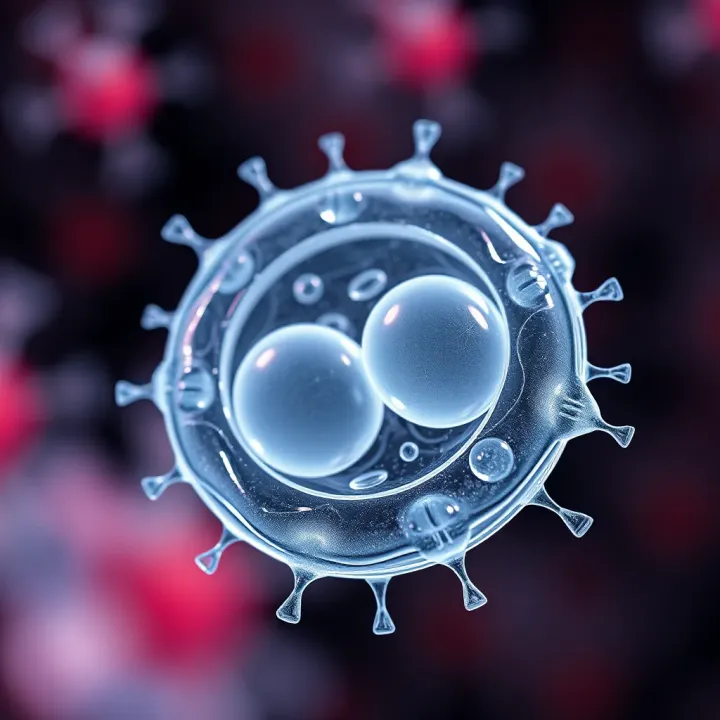
Binary fission isn’t just cell division; it’s a tightly regulated sequence ensuring both daughter cells receive identical genetic material, essential for maintaining species traits.
Unlike sexual reproduction, binary fission requires no mating partner. It starts with the replication of the microorganism’s DNA—a crucial stage where the entire genome duplicates efficiently. Following this, the cell elongates, and a septum forms mid-cell, which eventually splits the cell into two.
Key features include rapid generation time and simplicity, making binary fission an effective tool in nature’s survival kit. For example, under favourable conditions, E. coli can divide every 20 minutes, leading to exponential population growth.
This fast growth means understanding the steps of binary fission also supports antibiotic development, vaccine research, and managing microbial contamination in food and pharmaceutical industries.
The following sections will detail each phase: DNA replication, cell growth, septum formation, and the final cell division. The article aims to provide you with a clear, concise guide to these stages, supported by practical examples relevant to microbial studies and applied sciences.
Binary fission is the primary method through which many microorganisms reproduce and multiply. This process directly affects microbial population growth and their adaptation in various environments. Understanding binary fission offers vital insight into the life cycle of bacteria and certain other single-celled organisms, which can help investors and analysts appreciate microbial behaviour, especially in sectors like biotechnology and pharmaceuticals.
Binary fission is a straightforward asexual reproduction mechanism where a single parent cell divides into two identical daughter cells. Each daughter cell carries a complete set of genetic material identical to the original. This ensures rapid population increase in bacterial communities under favourable conditions. For instance, in nutrient-rich environments, Escherichia coli can divide roughly every 20 minutes using binary fission, leading to exponential growth.
The significance of this process lies in its efficiency and simplicity. Since there is no need for complex structures like a nucleus, binary fission allows microorganisms to reproduce swiftly, which influences infection spread, industrial fermentation processes, and antibiotic resistance development. For traders and investors tracking pharmaceutical companies or agricultural biotech firms, understanding this helps evaluate the biological foundation behind product innovations and market potential.
Binary fission's simplicity underpins much of microbial proliferation, making it central to microbial ecology and applied sciences.
Most bacteria reproduce through binary fission, including species such as Staphylococcus aureus and Salmonella typhi. Moreover, some protozoa like Amoeba and simple algae like Chlorella also rely on this process. This variety reflects its fundamental role across diverse biological domains.
Unlike mitosis observed in multicellular organisms, binary fission is faster and less complex, lacking stages like spindle formation. Its prevalence in microorganisms means that industries focusing on wastewater treatment, fermentation products like yoghurt, and bioremediation heavily depend on the principles of binary fission.
This understanding empowers students and professionals alike to connect microbial reproduction to practical outcomes, ranging from controlling infections to enhancing bio-manufacturing efficiency.
Before a microorganism divides through binary fission, it must prepare by growing adequately and replicating its DNA. This preparation phase ensures that the daughter cells receive identical genetic material and sufficient cellular components to function independently. Without proper growth and DNA copying, the cell risks producing defective or incomplete offspring.
The first step in preparation involves cell enlargement. The microorganism absorbs nutrients from its environment, converting them into energy and raw materials to build cellular structures. This metabolic activity fuels the synthesis of proteins, lipids, and other essential biomolecules. For example, Escherichia coli cells consume sugars rapidly during this phase, increasing in size almost twofold before division.
As the cell enlarges, it also boosts its internal machinery, such as ribosomes, to support upcoming processes. This period isn't just about growing bigger; the cell actively prepares all systems to handle DNA replication and eventual division. Poor nutritional conditions can slow this phase, delaying growth and reproduction.
The bacterial DNA typically exists as a single circular chromosome located in a region called the nucleoid. Unlike in eukaryotes, this DNA is not enclosed in a membrane-bound nucleus. This circular structure allows the microorganism to replicate its DNA efficiently during binary fission.
Understanding the circular DNA is key because it influences how replication begins and proceeds. Origin of replication (OriC) marks where duplication starts, ensuring precise copying of genetic information to pass on to daughter cells.
DNA duplication starts at the OriC site and proceeds bidirectionally, creating two replication forks moving in opposite directions around the chromosome. Enzymes like DNA helicase unwind the double helix, while DNA polymerase synthesises new strands by adding nucleotides complementary to each original strand.
This process is tightly regulated to prevent errors, as mistakes in replication can lead to mutations affecting cell viability or behaviour. After duplication, the two DNA molecules are segregated into different parts of the cell, setting the stage for division. Fast-growing bacteria like E. coli can complete DNA replication in about 40 minutes, which aligns with their rapid cell cycles.
Proper DNA replication during the preparation phase is critical; any delays or errors can disrupt microbial population growth and impact fields from fermentation industry to infection control.
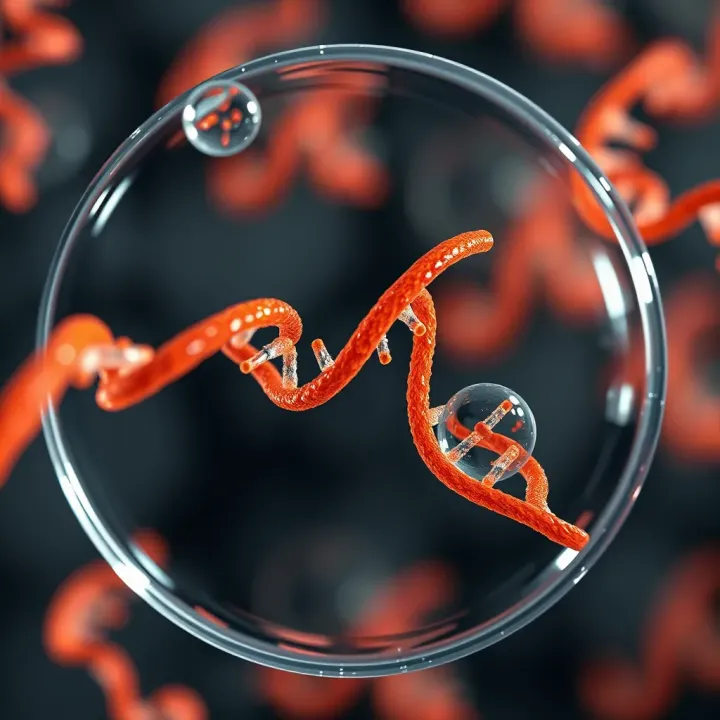
By focusing on cell enlargement and accurate DNA copying, microorganisms ensure they divide successfully, producing healthy, viable daughter cells equipped to thrive.
During binary fission, the segregation of DNA and the formation of the division site are critical steps that ensure each daughter cell inherits an exact copy of the genetic material. Correct segregation prevents genetic unevenness, which could lead to malfunction or cell death. At this stage, the cell prepares itself physically for division by moving chromosomes apart and marking the spot where the new cell wall will form.
Once the bacterial DNA has been replicated, the two copies (chromosomes) need to be separated. This movement occurs actively, not just by diffusion. Proteins like ParA and ParB guide the chromosomes by attaching to the DNA and “pulling” or “pushing” them towards opposite poles of the cell. For example, in Escherichia coli, such orchestrated movement takes place to position chromosomes so that division can happen symmetrically. Without this precise segregation, daughter cells may end up missing critical genetic information, affecting their survival.
The septum is the new divider that eventually separates the daughter cells. The cell membrane and wall play essential roles here by physically forming a barrier inside the original cell. The site of septum formation needs to be correctly identified to avoid unequal division. In bacterial cells, the cell membrane begins to invaginate, gradually pulling inward while the cell wall starts synthesising new layers to reinforce this split.
This process involves careful coordination because the cell wall must remain strong to protect the cells from bursting, especially under varying osmotic pressures common in many environments where bacteria live, such as waterlogged soils or the human gut.
Proteins like FtsZ, a tubulin-like molecule, assemble at the future septum site forming a ring called the Z-ring. The Z-ring acts as a scaffold, recruiting other proteins that help constrict the membrane and synthesise new cell wall material. For instance, in Bacillus subtilis, the Z-ring guides enzymes that break down the old wall just enough to allow separation while preventing leakage and maintaining shape.
Besides FtsZ, proteins like ZipA and FtsA contribute to stabilising the ring and linking it to the cell membrane. The coordination between these protein structures and the cell’s physical components ensures a clean, efficient split, resulting in two viable daughter cells.
Precise DNA segregation and division site formation enable microorganisms to multiply swiftly and maintain genetic uniformity, fundamental for their survival and adaptability.
These steps, though microscopic, have far-reaching implications. Understanding them helps in fields like antibiotic development, where targeting these proteins can prevent bacterial multiplication. For investors or traders in pharma, this biological detail underpins research strategies and drug discovery, demonstrating how molecular events influence market dynamics and innovation.
Division and separation mark the final and critical phase in binary fission, transforming one parent cell into two independent daughter cells. This process ensures that each offspring receives an identical copy of DNA and sufficient cellular machinery to survive and function. Understanding these events clarifies how microorganisms rapidly multiply, impacting everything from fermentation industries to infection spread.
The first step in physical division begins with the constriction of the cell membrane and the cell wall at the mid-cell. This invagination starts as the cell’s machinery, including the protein FtsZ, assembles into a ring-like structure known as the Z-ring. In Escherichia coli, this Z-ring recruits other proteins to form the divisome, which drives membrane invagination.
This constriction effectively pinches the parent cell inward, reducing the cell’s diameter until the cytoplasm divides. The rigid bacterial cell wall must be remodelled as well for the membrane to fold inwards. Enzymes break down segments of the peptidoglycan layer locally, allowing new cell wall material to synthesise concurrently. This coordination prevents cell lysis and maintains structural integrity during division.
Once constriction nears completion, the process of cytokinesis finalises the separation of daughter cells. The cell envelope between the two new cells matures and solidifies, sealing them off from each other. In some bacteria, a separation septum forms, dissolving at just the right moment to ensure complete physical and physiological independence.
For example, in Bacillus subtilis, autolytic enzymes digest the remaining cell wall material between daughter cells after cytokinesis, letting them separate fully. These daughter cells then return to normal metabolic activity, ready to grow and divide in their turn. Similar steps occur in other bacteria, underlining this phase’s universality.
The precision of constriction and cytokinesis directly influences bacterial population growth rates and impacts antibiotic effectiveness that targets cell wall synthesis.
The binary fission process, especially division and separation, highlights microorganisms’ efficiency in reproduction. This knowledge helps in industrial microbiology, antibiotic development, and managing microbial contamination effectively.
Binary fission in microorganisms does not simply happen in isolation; several factors shape how efficiently and quickly this process unfolds. Understanding these elements helps in areas like microbiology research, pharmaceuticals, and even financial analysis of biotech companies investing in microbial production.
Environmental factors significantly impact how microbial cells undergo binary fission. Temperature, for example, plays a vital role—each microorganism has an optimum temperature range where division happens swiftly. For Escherichia coli, division proceeds best around 37°C, which coincidentally is human body temperature. Deviations from this range can slow or even halt the process, affecting microbial growth rates.
Nutrient availability also directly influences cell division. Without sufficient sources like carbohydrates, nitrogen, and minerals, the cell cannot accumulate enough energy or raw material for DNA replication and elongation. This limitation affects industries relying on bacterial fermentation, such as antibiotic production, where growth media must be carefully formulated.
Besides these, oxygen levels matter. Aerobic bacteria require oxygen for energy generation, so limited oxygen leads to slower division, while anaerobes thrive in its absence. pH is another condition; extreme acidity or alkalinity can damage cellular components, hindering successful binary fission.
Collectively, these environmental conditions must be monitored and optimised, especially in laboratory and industrial settings, to maintain consistent microbial activity.
Binary fission is tightly regulated at the genetic and biochemical levels within microorganisms. Genes control the timing and sequence of cell division, ensuring DNA is fully replicated before the cell splits. In bacteria, the ftsZ gene codes for a protein forming a ring at the future division site, guiding septum formation essential for separation.
Biochemical checkpoints monitor DNA integrity and nutrient status, pausing division if problems arise. Protein regulators, such as Min proteins, prevent misplaced septum formation, which could cause uneven daughter cells.
Mutations in these genes or disruptions in biochemical pathways can cause abnormal division, leading to defective cells. Understanding these control mechanisms assists researchers in developing antibacterial agents that target division proteins, effectively blocking bacterial proliferation.
Precise control of binary fission through genetic and environmental factors is key to microbial survival and adaptation.
To summarise, binary fission hinges on both the external environment and internal genetic machinery. Variables like temperature, nutrients, and pH set the stage, while genes and proteins orchestrate the fine details. Recognising these influences provides a solid foundation for practical applications, from industrial microbiology to clinical treatments.
Understanding how binary fission compares with other cell division methods helps clarify its unique role in the microbial world. This comparison is key for students, researchers, and even financial analysts tracking biotechnology trends or microbial stocks, as it highlights different reproduction efficiencies and applications.
Binary fission is a straightforward, asexual process mostly seen in prokaryotes like bacteria, whereas mitosis occurs in eukaryotic cells, including plants and animals. In binary fission, the cell simply duplicates its genetic material and splits into two identical offspring. Mitosis involves multiple stages—prophase, metaphase, anaphase, and telophase—ensuring precise chromosome segregation before splitting.
For instance, while E. coli divides rapidly through binary fission, human cells use mitosis to maintain tissue growth and repair. Mitosis tends to be more complex due to the presence of chromosomes enclosed in a nucleus and the involvement of the spindle apparatus, absent in binary fission. This complexity means mitosis takes longer, but it also allows organisms to maintain genetic stability through numerous cell cycles.
Mitosis offers controlled, orderly cell division for multicellular organisms, while binary fission provides rapid replication ideal for single-celled microbes.
Budding represents another asexual method seen in some fungi, like yeasts, and certain bacteria. Unlike the equal division in binary fission, budding produces a smaller daughter cell growing out from the parent before detaching. This method results in unequal cell sizes initially.
For example, in Saccharomyces cerevisiae (brewer’s yeast), a bud emerges from the parent cell and grows until mature. Binary fission in contrast produces two cells of roughly equal size, speeding up population increase without the energy cost of forming buds.
Budding is advantageous in environments where gradual population increase suits resource availability, while binary fission supports faster expansion. Both methods allow organisms to proliferate without sexual reproduction but differ in energy use and growth patterns.
By comparing these processes, you see why binary fission suits microorganisms that need quick multiplication, such as bacteria during infections or fermentation. Meanwhile, mitosis supports complex organisms' development, and budding fits niche microbial lifestyles. This distinction aids in recognising microbial behaviour in practical contexts like drug development, fermentation technology, or ecological monitoring.
Binary fission is fundamental to the life cycle of many microorganisms, particularly bacteria. Knowing how this process unfolds gives you insight into how microbial populations expand rapidly under favourable conditions. This understanding also helps in grasping the balance of ecosystems where microbes play a key role.
Binary fission directly impacts microbial growth rates and population dynamics. For example, Escherichia coli can double in number every 20 minutes under optimal lab conditions thanks to this process. Such rapid multiplication influences how bacteria colonise environments, from soil to the human gut. It shapes ecological interactions by allowing microbes to quickly exploit resources or respond to changes. Additionally, binary fission contributes to genetic stability since daughter cells are clones of the parent. However, occasional mutations during DNA replication can lead to diversity, affecting evolution.
Beyond bacteria, binary fission in protozoa like Amoeba ensures survival and adaptation across freshwater and soil habitats. This means the process supports not just individual species but the broader microbial community structure and function.
Understanding binary fission sheds light on microbial roles in nutrient cycling, biodegradation, and even pathogenesis.
Recognising binary fission's details has practical benefits. For instance, in medicine, knowing bacterial replication helps design antibiotic treatment schedules that target specific cell division stages. In biotechnology, microbes engineered for producing enzymes or biofuels rely on efficient binary fission to scale up production.
In environmental science, this process assists in bioremediation efforts where bacteria break down pollutants. Monitoring binary fission rates can indicate microbial activity and ecosystem health.
Moreover, research into binary fission drives innovations in synthetic biology. Scientists manipulate gene regulation mechanisms involved in division to create customised microbial strains with desired traits.
Helps predict bacterial growth under various conditions
Aids development of medical and industrial strategies
Enhances knowledge of ecosystem functioning
This knowledge is crucial for anyone engaged in microbiology-related fields, including financial analysts considering biotech investments or traders tracking pharmaceutical advancements. The cellular basics you understand here connect directly to wider economic and environmental trends shaping our world.
Learn how to convert binary numbers (0s and 1s) into decimal system easily 🔢. Understand place values, stepwise conversion, plus its role in computing 💻 and electronics.

Learn how to convert octal numbers (base 8) to binary (base 2) with clear steps, tips, and common errors explained 📊 Perfect for students & programmers!

🔢 Learn how number to binary converters work, practical uses, easy methods & tools for quick conversion. Avoid common issues with our clear guide! 💻

Learn how to multiply binary numbers with clear steps and examples 🧮. Understand digital systems, computer arithmetic, and common challenges in this detailed guide.
Based on 12 reviews