

Key Candlestick Patterns Every Trader Should Know
📈 Learn essential candlestick patterns to spot trading opportunities in Indian stock and commodity markets. Master charts & make smarter decisions today!
Edited By
James Whitaker
Bullish candlestick patterns serve as vital indicators that suggest potential upward trends in financial markets. Understanding these patterns helps traders and investors make informed decisions about when to enter or add to long positions. In Indian markets, where volatility often swings sharply due to economic data or geopolitical news, recognising these patterns can boost timing precision.
Candlestick charts display price movements through individual candles, each representing open, high, low, and close prices over a set period. Bullish patterns typically signify a shift in buyer-seller dynamics, where buying pressure is gaining ground. Unlike basic line charts, candlesticks provide insights into market psychology, making them favoured among traders.

Key bullish candlestick patterns include the Hammer, Bullish Engulfing, and Morning Star. These patterns often follow downtrends and suggest a reversal or pause in the bearish momentum. For example, a Hammer appears as a small body with a long lower shadow, indicating rejection of lower prices. A Bullish Engulfing pattern features a larger green candle totally covering the previous red candle, signifying strong bullish sentiment.
Recognising these patterns alone won't guarantee profit but combining them with volume analysis, support levels, and broader market trends improves reliability.
To spot these patterns effectively, focus on the context—such as trend direction before the pattern forms—and confirm with other indicators like the Relative Strength Index (RSI) or moving averages. In India, factors like quarterly results announcements or RBI policy updates can affect pattern reliability, so keep an eye on news events alongside technical signals.
Practically, traders can use bullish candlestick patterns to:
Identify potential buy entry points.
Set stop-loss levels below pattern lows.
Gauge momentum strength when combined with volume spikes.
By mastering pattern recognition on candlestick charts, you can sharpen your market analysis, making your trading more responsive and potentially profitable in the dynamic Indian market environment.
Candlestick charts are central tools for traders aiming to understand market movements clearly and quickly. Their visual format condenses complex price action into simple, readable figures that help identify potential directions. Understanding these basics is essential for recognising bullish patterns, which signal upward trends, and making informed trading decisions.
Components of a candlestick include the body and shadow (or wick). The body represents the opening and closing prices within a period, while the shadows show the highest and lowest prices reached. For example, if a stock opens at ₹150 and closes at ₹160 in one hour, the body extends from 150 to 160, while the shadows may stretch above or below according to price fluctuations. This compact visual display helps traders grasp price behaviour at a glance.
Difference between bullish and bearish candles relies mainly on the relationship between opening and closing prices. A bullish candle closes higher than it opens, generally conveyed by a white or green candle, indicating buying pressure. Conversely, a bearish candle closes lower than it opened, often coloured black or red, showing selling pressure. For instance, in the Indian stock market, a ₹500 share opening at ₹495 and closing at ₹505 forms a bullish candle, signalling buyers dominated that period.
Role in technical analysis is significant because candlestick charts serve as primary inputs for pattern recognition. They help traders spot shifts in market sentiment early. For example, a series of bullish candles could hint at an emerging uptrend, guiding investors on entry or exit points. Indian traders often combine candlestick patterns with indicators like moving averages to improve the reliability of their trades.
Importance of price action lies in its reflection of real-time supply and demand changes. Bullish candlestick patterns arise when buyers show strength, pushing prices higher. By studying these movements, traders anticipate future trends without relying solely on lagging indicators. For example, during monsoon rains, stock volumes might drop, but a strong bullish candle could still highlight growing interest despite low liquidity.
Relation between candlestick shapes and buying pressure helps decode the market mood. Long bodies with small shadows suggest strong buying activity with little resistance, while candles with long lower shadows but small bodies often point to rejected lower prices and emerging bullish support. For example, a hammer candlestick with a long lower wick in a falling market may indicate buyers stepping in, signalling a potential reversal toward upside.
Recognising these subtle visual clues in candlestick patterns enables traders to detect probable upward trends early, providing a competitive edge in volatile markets like Sensex and Nifty 50.
Understanding these core candlestick elements and their interpretations forms the groundwork for spotting bullish patterns and making better trading choices in Indian markets and beyond.

Bullish candlestick patterns are crucial for traders aiming to catch early signs of an upward trend. These patterns visually indicate shifts in market sentiment, helping investors and analysts make informed decisions. Understanding the key features of common bullish patterns not only sharpens your chart reading skills but also improves timing for entering trades.
Identifying the hammer: The hammer is a single-line candlestick with a small real body near the upper end and a long lower wick at least twice the body length. It usually appears after a downtrend, signalling a potential reversal. The long lower wick shows that sellers pushed prices down, but buyers regained control by closing near the open price — a sign that selling pressure is easing. For instance, during a weakening phase in Reliance Industries shares on the NSE, spotting a hammer can alert traders about a bounce-back.
Distinguishing bearish hanging man: The hanging man has a similar shape to the hammer but appears after an uptrend. Despite its bullish-looking form, it warns that sellers are starting to push back, and the rally might lose steam. If a hanging man forms in a rising trend on a Nifty 50 stock and the next candle closes lower, investors should be cautious of a possible correction.
Interpreting context in an uptrend or downtrend: Context matters when reading these patterns. A hammer during a downtrend signals a bullish reversal, while a hanging man in an uptrend can mark potential weakness. Traders should always check volume and the following candle's movement to confirm the trend change. Ignoring context could lead to false signals, costing valuable trades.
Characteristics of bullish engulfing: The bullish engulfing pattern involves two candlesticks; the second candle’s body completely covers the first one, indicating a sharp reversal. It usually appears at a market bottom. For example, if Tata Motors shows a small bearish candle followed by a larger bullish one that 'engulfs' it, this suggests buyers are dominating and a price rise is likely.
Comparison with bearish engulfing: While bullish engulfing signals upward momentum, bearish engulfing is the opposite, showing sellers overpower buyers after an uptrend. Understanding the difference helps traders avoid entering long positions prematurely and manage their trades effectively.
Confirming the pattern with volume: High trading volume accompanying a bullish engulfing pattern strengthens its reliability. A surge in volume means more participants support the move, reducing the chance of a fake-out. In the Indian markets, watching volume on exchanges like NSE or BSE alongside candlestick formations can improve trading accuracy.
Formation of morning star: The morning star is a three-candle formation marked by a long bearish candle, a smaller-bodied candle (often a Doji), and a long bullish candle. It appears after a significant downtrend, signalling that selling pressure fades and buyers are regaining control. This pattern is useful for swing traders in stocks like Infosys to identify potential entry points.
Recognising piercing patterns: The piercing pattern is a two-candle setup where the second bullish candle opens below the first candle’s low but closes above its midpoint. It suggests a recovery from a downtrend but with less strength than a morning star. Spotting piercing patterns in volatile stocks like Yes Bank can be an early hint of price support.
Significance in correcting a downtrend: Both morning star and piercing patterns help traders spot likely reversals after price drops. They indicate a shift in market sentiment from bearish to bullish. Clear identification of these patterns can guide investors to optimise entry timing and reduce risks associated with rebounds.
Recognising these bullish candlestick patterns and their nuances can provide an edge, especially in dynamic markets like India’s. Coupling pattern insights with volume and overall trend context makes trading decisions more robust and less prone to error.
Bullish candlestick patterns form a valuable part of a trader’s toolkit, but relying on them alone can lead to many false starts. The key to using these patterns effectively is to combine them with other technical analysis tools and maintain a strong risk management framework. This approach helps confirm signals and protects capital, especially in volatile markets like the Indian stock exchanges.
Support and resistance levels play a crucial role in spotting reliable bullish reversals. When a bullish candlestick pattern appears near a strong support level—say, the previous low of a Sensex stock—it suggests buyers are stepping in to defend that price. Traders often wait for confirmation that price respects this zone before initiating a buy. For example, a bullish engulfing pattern forming at ₹450 on an Infosys share near its support level adds confidence to the upward move.
Resistance levels serve as barriers for price movement, so spotting bullish patterns near these may be less reliable unless there is a strong breakout with volume supporting the move. Understanding these levels sharpens trade entries and exits.
Moving averages and trend lines offer another layer for decision-making. A bullish pattern that appears near a popular moving average, such as the 50-day SMA (simple moving average), indicates momentum aligns with price action. Traders in the Indian market watch for patterns like a morning star forming just above this line to signal prolonging an upward trend.
Trend lines drawn along previous lows or highs further help confirm direction. When a bullish candlestick breaks a downward trend line, it often signals a shift in sentiment that traders can capitalise on. Combining these with candlestick patterns reduces chances of whipsaws.
Volume analysis and momentum indicators reinforce the validity of bullish patterns. A strong bullish candlestick accompanied by a spike in volume on NSE or BSE adds weight to the buying pressure. Volume confirms that actual market participants support the move, making it less likely to be a false signal.
Momentum oscillators such as RSI (Relative Strength Index) aid in timing trades. For example, a bullish pattern forming when RSI exits oversold territory often leads to sustained rallies, helping traders decide on entry points.
Setting stop-loss orders is vital when trading patterns, as no setup guarantees success. Place stops just below the low of the bullish pattern or a key support level to minimise losses if price reverses. For instance, after spotting a piercing pattern on Tata Motors stock at ₹350, setting a stop-loss at ₹345 helps contain risk.
Position sizing relates to how much capital one commits to a trade. It should align with the trader’s risk tolerance and the stop-loss distance. By sizing positions appropriately, even if a pattern fails, the overall portfolio damage remains controlled. A common rule is risking only 1-2% of capital on any single trade.
Avoiding false signals is a major challenge. Not every bullish candlestick pattern leads to an uptrend. Traders must look for confirmation like follow-up candles closing higher or additional indicators pointing in the same direction. Ignoring this can cause premature entries resulting in losses. For example, a hammer candlestick alone in a strong downtrend without volume support might not indicate reversal.
The effectiveness of bullish candlestick patterns comes from integrating them with broader market analysis and disciplined risk control. This balanced approach improves accuracy and protects your capital.
By cultivating this discipline and combining patterns with other tools, traders can better navigate Indian markets and enhance their decision-making process.
Using practical examples from the Indian market makes understanding bullish candlestick patterns much easier. India's market behaves differently compared to global ones, with its own volatility and influences such as RBI policies, corporate earnings, and geopolitical events. By studying actual Sensex and Nifty 50 charts, traders can recognise how bullish patterns emerge and impact price movements under real market conditions.
This approach helps traders apply theory to real-world situations, improving their timing and confidence. For instance, seeing a bullish engulfing pattern during a market correction in the Nifty 50 index offers practical clues about potential reversals specific to the Indian context. Experienced traders also use these insights to refine entry and exit points effectively.
Interpreting patterns in recent market movements
Recent Sensex and Nifty 50 charts often show clear bullish candlestick patterns around key support levels or after sharp declines. For example, during the market dip in April 2024, a hammer followed by a bullish engulfing pattern signalled a reversal, prompting savvy traders to enter long positions. These patterns are reliable indicators when confirmed by volume spikes or momentum filters.
Reading such patterns alongside the broader market sentiment, like RBI's interest rate decisions, can increase the effectiveness of technical analysis. Traders in India must also consider local events, such as budget announcements or monsoon forecasts, which often influence market psychology and therefore candlestick behaviour.
Adapting to volatile trading sessions
Volatility is a constant in the Indian stock market due to factors like FII (Foreign Institutional Investors) flows and sudden policy changes. During volatile sessions, bullish candlestick patterns might form and then falter quickly. Traders should look for confirmation signals such as follow-up bullish candles or supportive volume before committing funds.
For example, in a highly volatile day on the BSE Sensex, spotting a morning star pattern alone isn’t enough. Confirming it with the next candle’s movement or volume helps avoid getting caught in false signals caused by fast market swings. Risk management tools like stop-loss orders become vital under such conditions.
Intraday trading with candlestick signals
Intraday traders rely heavily on short-term candlestick patterns to catch swift price moves. A quick bullish engulfing or piercing pattern on a 15-minute or 5-minute chart can provide entry points for scalpers or day traders. However, these patterns may be less reliable than on daily charts, so combining them with intraday support-resistance and volume analysis is essential.
Indian traders often monitor derivatives markets alongside cash segments for cross-checking signals, which helps in validating intraday candlestick patterns. Quick decision-making and tight stop-loss placement are keys to managing risk while trading these patterns on shorter time frames.
Swing trading and longer-term trends
Swing traders and investors look for bullish candlestick signals on daily or weekly charts to identify entry points within medium-term trends. Patterns like morning star or bullish engulfing near significant trendlines or moving averages can signal a sustainable uptrend, perfect for holding positions over days or weeks.
In India, such medium-term signals are useful during earnings seasons or post-macro announcements when markets trend clearly. Swing traders often combine candlestick analysis with fundamental checks, like company quarterly results or sector performance, to strengthen their conviction before entering trades.
Understanding how bullish candlestick patterns behave on different time frames empowers Indian traders to adapt their strategies effectively to market conditions, whether in fast-paced intraday trades or steady swing setups.
📈 Learn essential candlestick patterns to spot trading opportunities in Indian stock and commodity markets. Master charts & make smarter decisions today!
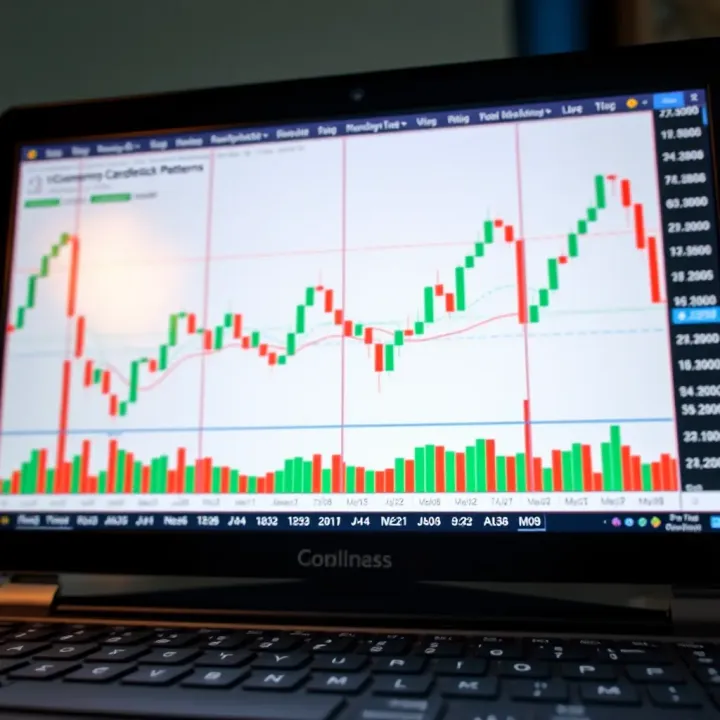
📊 Learn to master candlestick patterns with practical tips & PDF guides! Perfect for traders of all levels aiming to improve their strategy and analysis.

📊 Discover how multiple candlestick patterns work in trading, their meanings, and tips to use them effectively for better market decisions. 📈💡

📈 Master the top candlestick patterns for trading success! Learn their meanings, trader psychology, and practical tips plus handy PDFs for easy learning.
Based on 15 reviews