

Implementing Binary Search in C: A Practical Guide
Master binary search in C with clear, stepwise guidance 🔍. Learn iterative & recursive coding, error handling, testing & optimisation tips for real projects.
Edited By
George Ellis
Binary trees form a foundational structure in computer science, widely used in various algorithms and applications. At its core, a binary tree is a data type where each node holds data and has up to two child nodes, often referred to as the left and right child. This simple yet powerful organisation helps in representing hierarchical data efficiently.
Unlike arrays or linked lists, binary trees offer faster search, insertion, and deletion operations in many cases, especially when balanced properly. This makes them indispensable in tasks ranging from sorting and searching to managing hierarchical datasets like organisational charts or file systems.
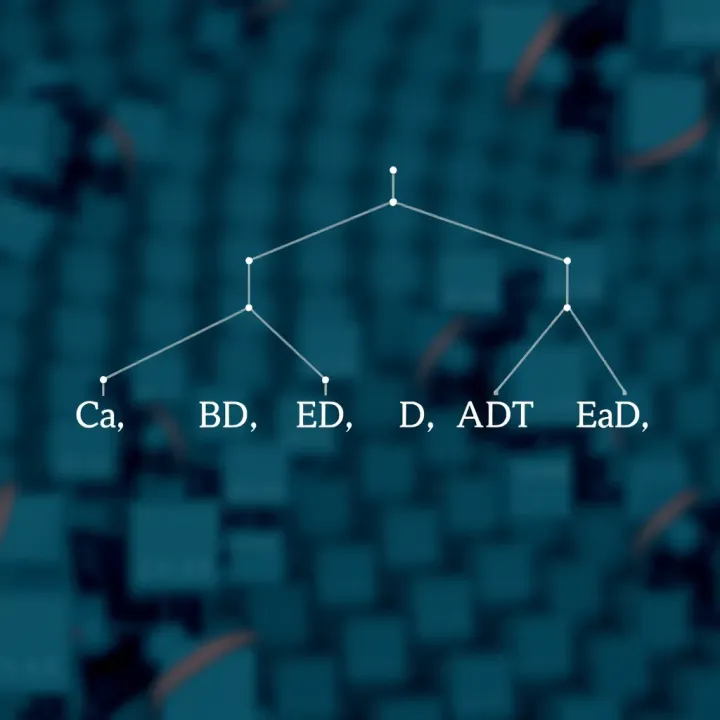
Understanding the Binary Tree Abstract Data Type (ADT) involves grasping its core components: node structure, tree properties, and the ways to traverse or manipulate the tree. A typical node contains the data element along with pointers to its left and right children. This design supports recursive processing, a hallmark of many tree algorithms.
In practical programming, binary trees enable efficient implementations of data structures such as binary search trees, heaps, and syntax trees, all crucial in financial modelling, market data processing, and algorithmic trading.
Common operations on binary trees include:
Traversal: Visiting each node in a particular order, e.g., inorder, preorder, and postorder.
Insertion and Deletion: Modifying the tree structure while maintaining its properties.
Searching: Quickly locating data within the tree.
Binary trees also come in various forms like complete, full, and balanced trees, each suited for specific situations. For traders and analysts, balanced binary trees such as AVL or Red-Black trees help maintain sorted data for quick access, directly impacting the responsiveness of trading algorithms.
Throughout this article, we will explore how these abstract concepts translate into concrete implementations, focusing on efficient coding techniques and real-life applications relevant to the Indian programming and financial environment.
Understanding the Binary Tree Abstract Data Type (ADT) is essential because it forms the foundation for many efficient algorithms in computer science, including searching, sorting, and organising data hierarchically. Binary trees map well to real-world problems like decision-making processes or indexing structures. By grasping their abstract nature, you can design flexible solutions that work regardless of underlying implementations, saving time and reducing bugs.
A binary tree ADT defines a collection of elements organised in a hierarchical manner, where each node contains data and pointers to at most two child nodes—left and right. The emphasis is on what operations can be performed rather than how they're implemented. For example, the ADT specifies operations such as insertion, deletion, and traversal without tying them to arrays or linked structures. This abstraction allows programmers to focus on logic rather than low-level details.
In practical terms, when implementing a binary tree, you can switch between linked nodes or array-based storage while maintaining the same interface for your algorithms. This flexibility especially benefits developers working on complex projects where data structures may need to evolve.
Trees differ significantly from linear data structures like arrays and linked lists. While arrays use contiguous memory to store elements sequentially, a tree organises nodes in branches with parent-child relationships. This non-linear organisation enables efficient representation of hierarchical data like organisational charts or file systems.
Unlike graphs, binary trees have no cycles and guarantee exactly one path between the root and any other node. This property simplifies traversal and searching. For example, binary search trees (BST) use this to perform search operations faster than linear data traversal.
Each binary tree node consists of three parts: the data stored, a reference to the left child, and a reference to the right child. These relationships create the distinctive parent-child structure. Understanding these connections is key to operations like traversal or insertion.
In applications like expression trees, where each node represents an operator or operand, the node's structure defines how the expression is evaluated. Recognising these relationships allows you to build recursive functions that easily navigate the tree.
The height of a node is the longest path from that node to a leaf, while the depth is the number of edges to the root. The level indicates the node's position starting from zero at the root. These measures help in analysing the tree's performance.
For example, a taller tree (higher height) may lead to slower search times in a BST. Balancing techniques aim to reduce height, improving efficiency. In database indexing, knowing the depth helps in structuring queries optimally.
Understanding different types of binary trees helps you choose the right structure. A full binary tree means each node has either zero or two children. A complete binary tree fills every level fully except possibly the last one, which is filled from left to right. A perfect binary tree is both full and complete with all leaf nodes at the same level.
For example, heaps use complete binary trees to ensure efficient insertions and deletions while maintaining balance. These distinctions guide design decisions based on application needs, like memory usage or speed.
Knowing these properties is fundamental when implementing binary trees in programming, as it directly affects algorithm complexity and resource management.
Understanding the different types of binary trees and their unique features is key when working with Binary Tree ADTs. Each variant has specific structural rules and practical benefits that influence how data is stored, accessed, and modified. For instance, certain tree types excel at fast search operations, while others are geared towards balanced storage minimizing height for efficient traversal. Traders, investors, and financial analysts who deal with prioritised or sorted data can find particular tree types more suitable, depending on their operations.
A full binary tree is one where every node has either zero or two children—no nodes have just one child. This strict structure is helpful in scenarios where a balanced approach to branching is necessary, such as in decision-making algorithms or expression parsing. Its predictability simplifies recursion and guarantees that nodes distribute evenly, which can improve traversal performance.
Complete binary trees are slightly less strict; all levels are fully filled except possibly the last, which is filled from left to right. This structure is commonly used in heap implementations, like priority queues, because it keeps the tree as compact as possible, reducing the height and thus time for insertions and deletions. Financial software that prioritises quick update and access, such as stock order books, can benefit from this property.
A perfect binary tree is both full and complete - all leaf nodes are at the same depth, and every parent has two children. These trees are ideal for applications requiring optimized and predictable performance, like parallel processing or certain database indexing techniques. They ensure minimal height for a given number of nodes, reducing the time complexity of traversals and searches.

Balanced trees maintain their height close to the minimum possible by ensuring the heights of left and right subtrees differ by no more than one. This balance is significant because it prevents the tree from degenerating into a linked list, which would degrade performance drastically. Balanced trees improve efficiency in databases and query processing where frequent insertions and deletions occur.
BSTs keep data sorted by placing smaller values in the left subtree and larger ones on the right. This property allows quick searching, insertion, and deletion in average cases. In financial trading platforms, BSTs support swift queries and updates, which is crucial for handling time-sensitive transaction data.
AVL trees are self-balancing BSTs that enforce a strict height difference condition between left and right subtrees. This balancing ensures operations maintain logarithmic time complexity even in worst cases. For Indian stock market analysts or brokers, AVL trees help maintain datasets like client portfolios or stock tickers with consistently fast access.
As another self-balancing BST variant, red-black trees use colour-coding rules to maintain balance during insertions and deletions. While slightly less rigid than AVL trees, they offer faster insertion and deletion times, which benefits systems like database engines or real-time financial analytics where a blend of speed and balance is important.
Knowing these types and their characteristics aids in selecting or implementing the right binary tree structure for specific computational needs, enhancing efficiency and reliability in data-heavy financial environments.
Understanding the operations of a Binary Tree Abstract Data Type (ADT) is critical because these form the backbone of how binary trees function in programming and data management. Efficient operations enable tasks like searching, sorting, and structuring data, which traders and financial analysts often rely on for quick data retrieval and organisation. Let’s break down both basic and advanced operations to see why they matter.
Traversal techniques define the order in which nodes of a binary tree get visited. Inorder traversal, for example, visits nodes in ascending sorted order for binary search trees, making it valuable for extracting data lists in order. Preorder and postorder traversals serve different purposes: preorder is useful when you need to process the root before its children, often applied in copying the tree structure or evaluating expressions; postorder helps in deleting or freeing nodes from memory since it visits children before the parent.
Each traversal fits particular problem contexts, such as evaluating expression trees in a trading algorithm or maintaining hierarchical data structures in financial software. Learning to implement and apply these traversals ensures you can extract or modify data efficiently.
Insertion adds new nodes into the binary tree while preserving its properties. For example, in a binary search tree, you insert nodes maintaining order so that lookup operations stay efficient. Deletion requires careful handling; removing a node with children might need restructuring the tree to avoid breaking the search or balance integrity. These operations underpin dynamic data management and are crucial when data sets change frequently, such as live market data updates.
Performing insertions and deletions correctly ensures the tree remains usable without costly restructuring or cascading errors.
Searching in a binary tree depends on its type. In a binary search tree (BST), searches can be efficient, typically O(log n), by comparing keys as you traverse down the relevant subtree. This direct approach suits real-time queries, like fetching stock prices or trade details quickly.
If the tree is unstructured, searching might degrade to O(n), scanning each node. Understanding tree organisation helps choose the right search strategy, which impacts how a financial application performs under load.
Height refers to the longest path from a node to a leaf, while depth measures distance from the root to a node. Knowing these helps estimate the tree’s balance, affecting search and insertion efficiency.
For instance, a taller tree might slow down queries, so financial systems that rely on quick lookups need monitoring of these metrics to decide when to rebalance.
Properties like fullness, completeness, or balance dictate how the tree behaves. Regularly checking these tells you whether your tree stays optimal or degrades with operations.
In trading software, detecting imbalance early can prevent slowdowns, as unbalanced trees might cause slower responses affecting decision-making speed.
Balancing keeps the tree’s height minimal, avoiding worst-case scenarios where operations become linear time. Techniques in AVL or Red-Black trees automatically rotate nodes after insertions or deletions.
This balance is vital in financial analytics and database indexing, where performance and reliability during heavy data insertion and querying are non-negotiable.
Efficient operations keep binary trees effective in managing dynamic data. For traders, investors, or students dealing with financial data, mastering these operations translates into faster computations and more reliable software performance.
Implementing the Binary Tree Abstract Data Type (ADT) brings the concept from theory into practice, allowing programmers to create, manipulate, and utilise binary trees efficiently in software. This section focuses on how to build the foundational structure, highlighting node design, memory handling, and representation choices. Knowing these details helps coders structure data for fast access, better memory use, and easier maintenance.
Each node in a binary tree stores two crucial pieces: the actual data and two pointers (or references) pointing to its left and right child nodes. These pointers form the tree’s backbone, connecting nodes in a hierarchical manner. For example, in a decision tree used for loan approval, each node could hold a criterion (like income level), while pointers branch out to 'approved' or 'rejected' paths.
This organisation lets the binary tree represent relationships clearly and enables operations like traversal and insertion. Properly designing node components ensures the tree performs optimally when handling tasks such as searching or sorting.
Dynamic memory allocation is common for nodes because trees grow and shrink unpredictably during program execution. Languages like C or C++ use pointers and manual allocation (like malloc or new), while Java handles this automatically via objects.
Efficient memory use means avoiding leaks and fragmentation, which can slow down performance. For instance, in resource-sensitive mobile apps for stock analysis, keeping a tight memory profile ensures smooth operation without frequent crashes or delays.
Binary trees can be represented using linked nodes or arrays. Linked nodes use pointers to connect parent and child nodes, providing flexibility and easy dynamic resizing. In contrast, array representation stores nodes in contiguous memory slots, often used for complete binary trees as this allows for simple index calculations to move between parent and children.
For example, heaps used in priority queues often use arrays for fast access since their shape is usually complete. On the other hand, expression trees benefit from linked structures due to their irregular shapes.
Linked nodes allow dynamic tree sizes, but require extra memory for storing pointers. They perform well when the tree is unbalanced or sparse. Arrays save space on pointers and provide quicker access via indexing but can waste memory in incomplete trees, as empty spots remain allocated.
Choose linked nodes if the tree changes often in size or shape. Arrays work best for static or nearly complete trees, like heaps or segment trees.
Inserting a node typically involves locating the correct position following binary tree rules. For instance, in a binary search tree, a node with value less than the parent goes left; otherwise, it goes right. Traversing the tree—using inorder, preorder, or postorder—lets you visit nodes in a specific sequence for searching, printing, or other operations.
Practical code examples, such as inserting ₹1 lakh into a portfolio management tree and traversing to list all investments in sorted order, make the concept relatable.
Searching usually means navigating from the root, comparing the target data with current nodes. In a binary search tree, this leads to efficient lookups averaging O(log n) time. This is crucial for applications like financial data analysis where quick retrievals from large datasets save time.
A straightforward search routine avoids complexity, ensuring that developers can adapt it for more advanced trees like AVL or Red-Black trees later.
Understanding these implementation choices is key to building effective binary trees that perform well in real-world applications, from database indexing to AI decision-making.
Binary trees play a vital role in various practical scenarios within computer science and software development. Their structured hierarchy simplifies data management and retrieval, making them valuable for systems that require efficient organisation and quick access to information. This section explores some key applications of binary trees, illustrating their concrete uses and benefits.
Binary trees are fundamental to expression parsing in compilers and interpreters, where they represent the structure of arithmetic and logical expressions. A syntax tree, often a binary tree, organises operands and operators in a way that respects precedence and associativity rules. For example, the expression (a + b) * c can be represented with the multiplication operator at the root and its two children as the addition subtree and the operand c. This representation enables compilers to evaluate expressions efficiently and perform optimisations like constant folding.
Efficient database indexing relies heavily on binary trees, especially Binary Search Trees (BSTs) and Balanced Trees like AVL or Red-Black Trees. These trees maintain sorted data, allowing fast lookup, insertion, and deletion. In Indian e-commerce platforms handling lakhs of entries, such as product catalogues, balanced trees help keep query times low even as data grows. This ensures smoother user experience and quick access to relevant information.
File systems use tree structures to organise files and directories hierarchically. While many systems use general trees, binary trees can also represent file organisation in certain cases. For instance, version control systems may leverage binary trees to track file changes efficiently. The left and right child nodes might represent previous and current versions, respectively, making it simpler to traverse changes and commit histories.
Search engines and autocompletion features often rely on tree structures to suggest relevant queries quickly. Though tries (prefix trees) are common, binary trees also play a role. For example, a red-black tree can manage dynamically changing datasets, like trending search terms, by maintaining balance and offering quick insertions and lookups. This helps users get instant suggestions, enhancing usability.
Binary trees assist network routing by organising routing tables efficiently. Balanced trees can store IP addresses or routing prefixes, allowing routers to search and update routes swiftly. This is crucial given the high volume of data packets exchanged in networks daily. Indian telecommunications providers benefit from such structures to manage vast network traffic, ensuring smoother connectivity.
In Artificial Intelligence, decision trees use binary tree structures to classify data and make predictions. Each node splits data based on certain conditions, leading to leaf nodes representing decisions or outcomes. For example, loan approval systems in Indian banks use decision trees to evaluate credit risk by analysing factors like income, employment stability, and past defaults. The clear path from root to leaf makes these models interpretable and practical for real-world applications.
Binary trees provide a versatile foundation that underpins critical computing applications, offering a balance between simplicity and efficiency necessary for modern software systems.
These applications highlight the practical value of binary tree ADT beyond theoretical concepts, demonstrating their significance in day-to-day digital infrastructures.
Master binary search in C with clear, stepwise guidance 🔍. Learn iterative & recursive coding, error handling, testing & optimisation tips for real projects.
Explore how to determine the maximum height of a binary tree 🌳 in computer science. Learn methods, challenges, and real-world uses with clear examples 📊.
Learn how dynamic programming helps build optimal binary search trees 🔍 for faster searches. Understand cost, probabilities, and practical tips in CS.

Explore the Optimal Binary Search Tree algorithm in DAA 📚 Learn its dynamic programming steps, practical uses, time complexity & implementation challenges.
Based on 13 reviews