
How to Convert Binary Numbers to Decimal
Learn how to convert binary numbers (0s and 1s) into decimal system easily 🔢. Understand place values, stepwise conversion, plus its role in computing 💻 and electronics.
Edited By
James Whitaker
Binary representation forms the backbone of modern computing. At its core, computers work with two states — 0 and 1 — making binary the language machines understand best. Every piece of data, be it numbers, images, or letters, is eventually translated into these binary signals.
Take the letter 'a' as an example. To represent 'a' digitally, computers use coding standards like ASCII (American Standard Code for Information Interchange) and Unicode, which assign unique binary values to characters. For instance, in ASCII, the letter 'a' corresponds to the decimal number 97, which is represented in 8-bit binary as 01100001.

Understanding this transformation helps demystify how text reaches your screens or travels across digital networks. Each of these bits (binary digits) plays a vital role in telling the computer if a certain signal is on (1) or off (0).
Knowing the binary equivalent of letters is especially helpful for professionals dealing with data processing, encryption, and coding, where precision matters.
Here's how the letter 'a' breaks down in binary under different standards:
ASCII: Uses 7 or 8 bits to encode characters. 'a' in ASCII is 01100001.
Unicode: Supports many more characters beyond ASCII's range, using variable-length encoding like UTF-8. Still, the binary for 'a' remains the same under UTF-8 because it aligns with ASCII.
This binary code helps software interpret, store, and display characters, forming the foundation of digital text processing. Without such standards, computers wouldn't know how to translate a simple letter into meaningful data.
In financial markets and data analytics, this understanding aids in grasping how programming languages store strings or how encryption algorithms manage textual information. It’s a base layer contemplation that can clear up complexities around data formats and transmission in digital finance tools.
In summary, the letter 'a' turning into 01100001 is a small but essential example of how digital systems communicate internally. Knowing this opens doors to more advanced topics like character encoding, data compression, and cybersecurity.
Binary is the foundation of all modern computing. At its core, binary is a number system that uses only two symbols: 0 and 1. These two digits represent off and on states, making it especially suited for electronic devices that rely on simple voltage differences to process and store information. Understanding binary helps you see how computers handle everything from numbers to letters, including the letter 'a'.
Binary is a base-2 numbering system, unlike the decimal system, which is base-10 and uses digits from 0 to 9. In binary, each digit, called a bit, carries a value of either 0 or 1. For example, the binary number 1011 equals 11 in decimal, calculated as 1×2³ + 0×2² + 1×2¹ + 1×2⁰.
This simplicity makes binary practical for computing. Since electronic circuits can easily represent two states—like a switch being on or off—they perfectly match binary's two digits. This way, complex data can be broken down into bits that computers understand natively.
Decimal is what we use every day; it's intuitive because humans have ten fingers. The decimal system's base-10 means each place represents powers of 10. Binary, on the other hand, is base-2, and each place represents powers of 2. This difference affects how information is encoded and processed inside machines.
For instance, the decimal number 10 is 1010 in binary. Computers don’t process decimal directly; they convert these numbers into binary to work efficiently with circuits. Knowing this difference explains why a letter like 'a' is stored as a specific binary code rather than a character type as humans see it.
Computers use binary numbers in nearly every operation. Whether displaying the letter 'a' on your screen, performing calculations, or saving files, the data is translated into binary sequences. For example, in the ASCII standard, the lowercase 'a' is represented as 01100001, an 8-bit binary value.
Because binary data can be passed through simple electronic components, it creates a reliable way to communicate large amounts of information quickly. Without this, modern computing as we know it wouldn’t be possible.
Binary's biggest strength lies in its reliability. Electronic signals are prone to noise and interference, which can distort data. Binary systems reduce this risk by having only two states—high voltage (1) and low voltage (0). As long as the signal is above or below a certain threshold, the computer reads it correctly.
This is like distinguishing between day and night rather than trying to detect every shade of grey. Such clear distinctions prevent errors and make digital systems dependable.
Electronic hardware, such as transistors, acts as tiny switches controlling the flow of electricity. These switches easily represent binary values: when a transistor is closed or conductive, it encodes a 1; when open or non-conductive, it encodes a 0.
This straightforward on/off system allows mass production of chips that process binary data quickly and efficiently, keeping costs low and performance high.
Binary simplifies the design of digital circuits like logic gates. Circuits built around binary can perform basic operations such as AND, OR, and NOT. Combining these gates enables complex computations.
For example, to process the letter 'a', binary values flow through circuits that recognise its ASCII code and instruct the system to display or store it accordingly. With simpler designs, digital devices become faster and less prone to faults.
Binary representation is more than a number system—it's the language computers speak, transforming simple bits into everything from letters to financial transactions with accuracy and speed.
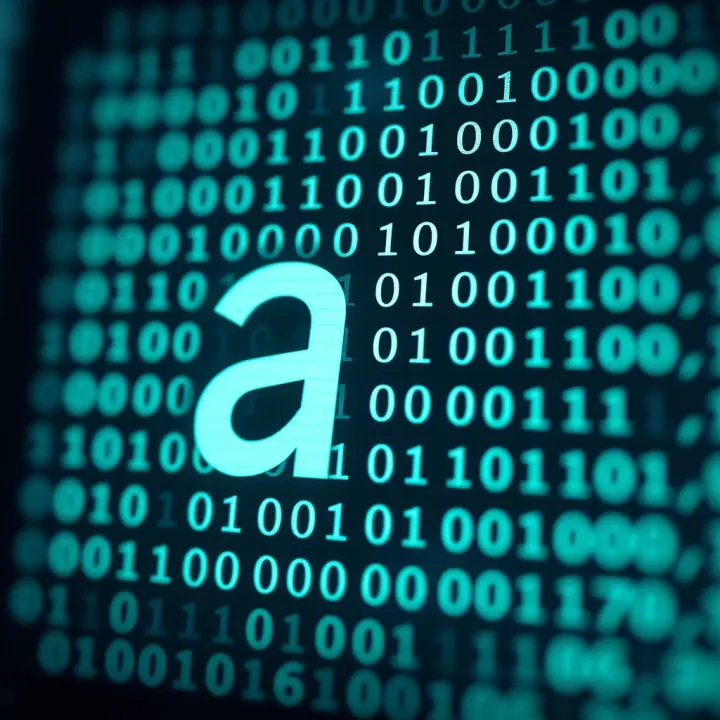
Understanding these basics lays the groundwork for grasping how digital systems handle text characters, especially the letter 'a', which we will explore further in the next sections.
Encoding letters as binary data is fundamental to how computers store and process text. Without a standard way of representing characters like 'a' in binary form, digital communication and storage would be chaotic, making data sharing between systems nearly impossible. Understanding this conversion clarifies how machines interpret our everyday language, transforming letters into sequences of zeros and ones.
ASCII, or the American Standard Code for Information Interchange, was introduced in the early 1960s to standardise text representation across different hardware and software platforms. Before ASCII, computers had various own ways to represent text, causing compatibility issues. ASCII created a uniform system using 7-bit binary codes, enough to cover English alphabets, digits, and basic symbols. This was a crucial step for interoperable digital communication and data storage.
In ASCII, the lowercase letter 'a' is represented by the decimal number 97, which converts to the 7-bit binary sequence 1100001. When stored or transmitted, this binary sequence signals to the computer to display 'a'. For example, when you type 'a' in a computer or mobile device, the OS translates that into this binary code behind the scenes. This simple mapping is what bridges human-readable text and machine-level data.
While ASCII served well early on, it limits characters to 128 unique codes, enough only for basic English. It cannot represent accented letters, symbols from other languages, or emojis, which India with its many languages and scripts significantly requires. Besides, ASCII does not cater for many technical symbols or currency signs like the ₹ symbol. This limitation led to multiple regional encodings and confusion when exchanging data internationally.
Unicode was developed to overcome ASCII's constraints by offering a universal character set that covers practically every written language, symbol, and emoji. It uses variable-length encoding, primarily UTF-8 or UTF-16, which can represent over 1 million characters. This flexibility allows computers to handle multilingual text easily, crucial in a globalised world and multilingual countries such as India.
Unicode assigns the letter 'a' the code point U+0061, which matches the ASCII value for lowercase 'a'. This backward compatibility ensures that existing ASCII text remains valid. However, Unicode encodes this into one or more bytes depending on the encoding scheme. For instance, UTF-8 represents 'a' as the single byte 01100001, keeping things efficient while supporting vast character ranges.
Unicode's comprehensive reach allows seamless data exchange and software operation across different languages and cultures. Without it, Indian languages like Hindi, Tamil, or Bengali could not coexist easily with English on digital platforms. Applications, websites, and databases rely heavily on Unicode for consistent text display and manipulation. In effect, Unicode is the backbone that keeps today's multilingual digital environment working smoothly.
Understanding how characters like 'a' convert into binary through ASCII and Unicode helps demystify the complex processes in computing and highlights the importance of standardisation in global technology.
Understanding how the letter 'a' converts into binary code gives insight into the foundation of text encoding. This detailed representation is important because computers do not directly process letters but handle sequences of bits. Knowing the binary forms for 'a' and 'A' helps realise how case sensitivity works at the machine level, which matters for programming, data storage, and communication.
The lowercase letter 'a' is represented in ASCII code by the decimal number 97. Its binary equivalent is 01100001. This 8-bit sequence fits perfectly in one byte, making it easy to store and process. Practically, whenever you type 'a' on a computer or mobile, this exact pattern is transmitted and stored behind the scenes.
This simplicity allows software and hardware architects to design systems that recognise text input efficiently. For instance, text editors and messaging apps rely on these codes to correctly display the typed alphabet.
Similarly, the uppercase letter 'A' is encoded as decimal 65 in ASCII, which translates to the binary code 01000001. The difference in these binary patterns reflects the change in case. This distinction is vital, as many programming languages and databases treat 'A' and 'a' differently, impacting search results and variable names.
Knowing this binary helps debugging issues where case sensitivity causes errors or unexpected behaviour. For example, in coding interviews or software bug fixes, recognising these binary values can quicken problem-solving.
Looking closely, the binary codes for 'a' (01100001) and 'A' (01000001) differ by a single bit at the third position from the left. This tells us that case differences are encoded by flipping one bit—a neat design choice by ASCII's creators.
This simplicity makes conversions between cases straightforward for computers, improving performance when transforming text. This also explains why 'a' and 'A' share identical binary structures except for a small difference, which is crucial in efficient text processing.
Computers store text as sequences of bytes, with each byte representing a character like 'a' or 'A' in binary. These bytes sit in memory or files, making text digital and indexable. Processing involves interpreting these sequences, often converting bytes back into visible characters.
In programming, these stored binary values are fundamental. For example, when a string variable holds "apple", it's really a series of bytes like 01100001 for 'a' stored in sequence.
Programming languages use these binary values to handle characters and strings. Functions to convert characters to uppercase or lowercase adjust the bits accordingly. Languages like C, Java, and Python internally use ASCII or Unicode encodings, relying on correct binary translations.
This binary handling affects sorting, pattern matching, and text manipulation tasks common in software and financial applications. For traders and analysts building tools, understanding this helps avoid bugs in data interpretation.
Conversion goes both ways—systems translate text input into binary for storage and back into visible characters when displaying. Encoding and decoding use lookup tables or algorithms based on standards like ASCII or Unicode.
For example, when you receive a message in WhatsApp or read a document, your device converts binary back into letters. Errors in these conversions can cause garbled text, showing why consistent binary representation matters in global, multilingual computing environments.
Recognising the binary behind letters like 'a' demystifies how digital text works, bridging the gap between human language and machine logic.
Understanding how letters like 'a' convert into binary code is not just academic — it has real-world impact on how we store, transmit, and protect text data. This section explores practical aspects, from basic file storage to broader applications in education and technology.
Files on your computer or mobile device store text by converting each character into binary. For instance, the letter 'a' becomes a sequence of bits following ASCII or Unicode standards. When you save a Word document or a text message, the device translates each letter into binary, which the storage medium then holds. This process ensures that the data remains consistent and readable every time you open the file.
Text encoding also affects file size and compatibility. Simple ASCII encoding of English letters like 'a' takes less space, which was critical when storage was costly. However, for multilingual support, Unicode encoding is preferred despite its larger size, as it covers a far wider range of characters. This choice impacts everything from app development to data exchange in globalised systems.
Binary plays an equally vital role in data transmission. When you send a message over WhatsApp or upload a document, the text is transformed into binary signals that travel through network cables or wireless channels. These signals must remain exact; even a single changed bit can corrupt the message or cause errors. Various protocols ensure that binary data reaches its destination intact, maintaining communication reliability.
Finally, binary encoding relates closely to encryption and compression. Encryption algorithms convert text into unreadable binary sequences to secure it against unauthorised access — think of online banking or private emails. Compression techniques reduce the binary size of files to save bandwidth and storage, using patterns within binary code to represent data more efficiently. Both these applications depend on a precise understanding of how text correlates with binary.
Teaching the binary basis of text helps learners grasp fundamental computing concepts. When students see how 'a' converts to bits, they appreciate the digital nature of modern devices. This knowledge forms the foundation for understanding how computers think and communicate.
For programmers, binary literacy enhances debugging and optimising code. Knowing binary representations allows developers to manipulate data at a low level, which can improve performance or solve specific problems. For instance, performance-critical Indian fintech apps benefit from efficient data handling, which requires some degree of comfort with binary logic.
In India, growing emphasis on computer science education means binary understanding is more relevant than ever. Schools and colleges incorporate it into curricula to prepare students for tech careers. Also, initiatives like the National Digital Literacy Mission promote awareness about digital data, helping people engage with technology confidently. With the country’s digital economy expanding, binary knowledge supports not just coders but also a broad range of professionals navigating the information age.
Grasping the binary representation of letters is a stepping stone to deeper digital fluency, crucial in both everyday technology use and specialised fields alike.
When learning about binary representation, certain doubts often arise, especially about how letters like 'a' translate into bits. Addressing these questions helps clear confusion and provides a better grasp of computing fundamentals.
Binary is commonly associated with numbers since it uses only two digits: 0 and 1. However, binary itself is not limited to numbers alone. Computers use binary as the basic language for all data types, including letters, images, and sounds. For example, the letter 'a' in text files is stored as the binary number 01100001 according to the ASCII standard. This means each character, symbol, or command in a computer is converted into a unique binary code, allowing diverse data to be represented and processed by digital systems.
Yes, every character can be represented in binary, but the method depends on the encoding system. ASCII, an older standard, uses 7 or 8 bits to code common English characters, including 'a'. Yet, ASCII falls short with characters from other languages or special symbols. That gap is filled by Unicode, an extensive encoding system that maps characters from almost all scripts worldwide into binary forms. This ensures, for instance, that the Hindi letter 'अ' or an emoji like 😊 each have their own unique binary codes. So, binary encoding is flexible enough to cover virtually any character, given the right encoding.
Binary encoding itself doesn’t decide how text looks on your screen; it only stores what the text is. The actual display depends on fonts and rendering software. For example, the binary sequence for 'a' remains consistent across devices, but an app like Microsoft Word or a website can show it in different fonts or sizes. Think of binary as the recipe, while font styles determine the final dish’s appearance. If the binary data is corrupted or wrongly interpreted, text might show as gibberish or special symbols, but under normal conditions, encoding simply ensures accurate data transfer and storage.
Understanding these common questions gives you a clearer view of how computers treat letters like 'a' not just as characters but as sequences of bits, making digital text communication possible across diverse languages and platforms.
In practical terms, knowing these aspects helps traders, investors, and analysts appreciate how digital information flows securely and reliably in the systems they use every day, from emails to stock market feeds. It reinforces the importance of proper encoding standards in global financial technologies and software architectures.
Learn how to convert binary numbers (0s and 1s) into decimal system easily 🔢. Understand place values, stepwise conversion, plus its role in computing 💻 and electronics.

Learn how to convert octal numbers (base 8) to binary (base 2) with clear steps, tips, and common errors explained 📊 Perfect for students & programmers!
🔢 Learn how number to binary converters work, practical uses, easy methods & tools for quick conversion. Avoid common issues with our clear guide! 💻

Learn how to multiply binary numbers with clear steps and examples 🧮. Understand digital systems, computer arithmetic, and common challenges in this detailed guide.
Based on 11 reviews