

Understanding Numbers in Binary Code
Explore how numbers work in binary code 💻: basics, conversions, binary operations, and practical computer uses. Perfect guide for tech enthusiasts in India 🇮🇳.
Edited By
Amelia Hughes
A 4-bit binary ripple counter is a simple digital circuit widely used in electronics for counting and timing tasks. It consists of four flip-flops connected in series, where the output of one flip-flop acts as the clock input for the next. This design allows the circuit to count from 0 to 15 in binary, making it useful in various applications — from basic digital clocks to frequency dividers.
Understanding the ripple counter’s operation is essential for students and professionals dealing with digital systems. Unlike synchronous counters, where all flip-flops change state simultaneously, ripple counters update sequentially. This results in propagation delay, as the output changes ripple through each flip-flop, hence the name.
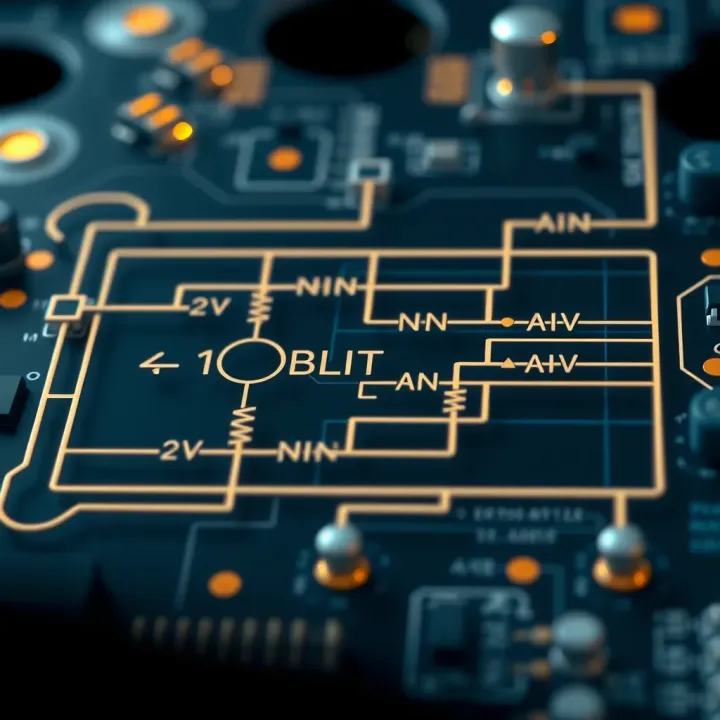
Ripple counters are preferred for their simplicity and low hardware requirements, though they may not be suitable for high-speed operations due to timing delays.
The first flip-flop toggles with every clock pulse; its output then triggers the second flip-flop, and so on. Each flip-flop represents one bit, starting from the least significant bit (LSB) to the most significant bit (MSB). This sequential toggling creates a binary count sequence.
In Indian educational institutes like engineering colleges, the 4-bit ripple counter is a common example used to demonstrate basic counting mechanisms in digital electronics labs. Industries employing digital electronics, including automation firms in Bengaluru and Pune, rely on ripple counters in timing circuits and frequency division, though synchronous counters have largely taken over speed-critical applications.
Counting Range: 0 to 15 (2^4 - 1), suitable for small-scale digital applications.
Speed Limitations: Propagation delay restricts use in faster circuits.
Hardware Simplicity: Requires fewer components compared to synchronous counters.
The ripple counter’s straightforward design helps beginners grasp the fundamentals of digital counting while showing the practical trade-offs engineers face. Its relevance spans from classroom examples to foundational roles in industrial electronics.
Understanding the basics of binary counters and ripple counters is essential before diving into the specifics of a 4-bit binary ripple counter. These devices underpin many digital electronics applications, from simple timer circuits to complex microprocessor functions. Knowing their operation helps in designing efficient counting mechanisms and troubleshooting digital systems in contexts like stock market tickers, digital clocks, and even embedded systems.
A binary counter is a sequential logic circuit that goes through a predetermined sequence of states upon receiving clock pulses. It counts in binary form, typically increasing by one with each clock pulse—starting from zero up to its maximum capacity. For example, a 3-bit binary counter counts from 000 to 111, representing decimal 0 to 7.
Binary counters are widely used to keep track of events, measure frequencies, or generate time delays. In Indian contexts, digital clocks often use binary counters to maintain accurate time without mechanical complexity. Compared to mechanical counters, they offer faster speeds, lower wear and tear, and easier integration with digital devices.
Ripple counters operate asynchronously, meaning the clock pulses do not reach all flip-flops simultaneously. Instead, the first flip-flop receives the clock signal directly, and subsequent flip-flops are triggered by the output of the previous one. This setup creates a ripple effect as the counting signal propagates through the flip-flops.
This asynchronous process is simple and easy to implement, which makes ripple counters popular for applications where speed is not a priority. For instance, in a traffic signal controller in a smaller town, a ripple counter works fine since delays caused by asynchronous counting do not affect overall performance significantly.
The ripple effect causes delays but also keeps design straightforward and cost-effective.
The main difference lies in how the clock signals are applied. In ripple counters, the clock is fed only to the first flip-flop, causing a chain reaction. Synchronous counters, on the other hand, receive clock pulses simultaneously across all flip-flops. This makes synchronous counters faster and better suited for high-frequency applications.
However, synchronous counters require more complex circuitry, often increasing design cost and power consumption. In practical Indian electronics teaching labs, ripple counters are commonly used to introduce fundamental counting concepts before moving on to synchronous designs.
To sum up, ripple counters offer simplicity and low cost, while synchronous counters deliver speed and precision. Choosing the right type depends on the application's requirements, especially when balancing performance and resources.

Understanding the structure and operation of a 4-bit binary ripple counter is key to grasping how simple electronics can perform counting tasks. The counter itself consists of a series of flip-flops connected in a chain to count binary numbers from 0 to 15 (for 4 bits). This arrangement makes it straightforward to track events or time intervals in digital circuits without complex programming.
The core building blocks of a 4-bit ripple counter are flip-flops, typically JK or T-type flip-flops. These bistable devices switch between two states, representing binary 0 and 1. JK flip-flops are common since they offer toggling behaviour when both J and K inputs are high, simplifying the counting operation. In practical terms, each flip-flop represents one bit and toggles its state when triggered, enabling the binary counting sequence.
In this counter design, four flip-flops are cascaded, where the output of one acts as the clock input for the next. This setup simplifies the circuit and reduces wiring complexity, making it an economical choice for many basic applications in Indian academic labs or budget electronic projects.
The counting sequence follows a binary progression: 0000, 0001, 0010, , up to 1111. Each flip-flop corresponds to a bit position, with the first flip-flop toggling every clock pulse, the second toggling every two pulses, and so forth. This orderly change allows easy interpretation of the count value, useful for timer circuits or digital event counters.
The name 'ripple counter' comes from the way the output of each flip-flop triggers the next one, causing a ripple-like effect as the count advances. The initial clock pulse flips the first flip-flop, while subsequent flip-flops toggle as their predecessor's output changes state. This asynchronous triggering is why the counter is also called an asynchronous counter.
However, this arrangement introduces propagation delays. Each flip-flop takes a finite time to respond and change state, causing a delay that accumulates down the chain. For instance, by the time the fourth flip-flop toggles, the total delay can be noticeable, limiting how fast this counter can operate reliably. This delay is an important consideration in designing circuits needing precise timing or faster counting speeds.
Ripple counters offer a simple and cost-effective solution for counting applications but require attention to timing delays, especially when used in real-world Indian electronics projects, where resources may be limited.
In summary, a 4-bit binary ripple counter uses flip-flops chained to count binary numbers up to 15. The ripple effect drives the counting process but introduces cumulative delays that must be managed depending on application needs.
Understanding timing and frequency aspects of ripple counters is essential to getting the best out of them in practical applications. These considerations directly affect how fast and accurately the counter can operate, which is critical for tasks such as digital clocks, frequency division, and event counting. In a 4-bit binary ripple counter, timing issues mainly stem from the way signals propagate through flip-flops, making it necessary to assess propagation delay and its impact on maximum operating frequency.
Propagation delay is the time taken for a signal to travel through a digital component—in this case, a flip-flop. In a ripple counter, each flip-flop's output triggers the next one in series. This sequential triggering causes a cumulative delay as the signal ripples through the stages. For example, if each flip-flop has a propagation delay of 15 nanoseconds, the total delay across four flip-flops could reach about 60 nanoseconds. This delay isn't just a minor technical detail; it defines how correctly the counter updates its output states in time.
If the input clock pulses come too quickly, the counter may not have finished updating the previous count before the next pulse arrives. This leads to counting errors or miscounts, disrupting the accuracy of the digital system. Propagation delay also affects the timing of output signals, which can be a challenge for synchronising with other circuit parts.
Because of propagation delay, ripple counters cannot operate at arbitrarily high speeds. The maximum counting frequency is roughly the reciprocal of the total propagation delay through all stages. Using the previous example, with a total delay of 60 nanoseconds, the maximum frequency is about 16.6 MHz. Pushing the counter beyond this limit risks glitches and incorrect output.
In real-world Indian electronics projects or classroom settings, this limitation means ripple counters suit slower applications such as event count displays or basic timing tasks rather than high-speed data processing. Engineers often opt for synchronous counters where all flip-flops receive the clock input simultaneously to overcome this speed bottleneck.
To summarise, evaluating propagation delay and understanding its effect on the maximum counting frequency ensures that the 4-bit binary ripple counter works reliably. This knowledge prevents unexpected misbehaviour in circuits and guides better design choices tailored to the needs of Indian electronics enthusiasts and students alike.
When working with digital circuits, understanding the strengths and weaknesses of a 4-bit binary ripple counter is vital. These counters are popular in many entry-level electronics applications due to their straightforward design. However, their limitations become apparent in more demanding situations like high-speed counting or complex timing requirements.
One of the biggest reasons ripple counters remain common is their simplicity. They require fewer components compared to synchronous counters since each flip-flop only triggers on the output of the previous one. This simplicity naturally leads to lower manufacturing costs and easier troubleshooting, which matters a lot in basic electronics projects or educational kits you might find in college labs.
For instance, for a student experimenting with digital electronics, building a 4-bit ripple counter using JK flip-flops can be straightforward and budget-friendly. This ease of assembly makes the 4-bit ripple counter a practical choice when cost constraints and basic counting needs come together.
Ripple counters offer a plug-and-play style operation. Because each stage depends only on the prior one, wiring up the circuit does not require extensive clock distribution networks or complicated timing arrangements. This reduces design complexity and saves time, especially in small-scale projects.
This simplicity plays well, for example, in timer circuits or simple frequency dividers, often found in hobbyist modules or teaching aids. Users don't have to worry much about synchronising the inputs, which can be a headache in synchronous counters.
Ripple counters suffer from cumulative propagation delays — each flip-flop's delay adds up as the signal passes through. This delay means the output bits do not change exactly at the same instant. Such asynchronous switching can cause glitches, which are problematic in precision applications.
Consider a digital clock using a ripple counter; the delay might cause temporary incorrect readings on the display during transitions. Although marginal in some cases, in fast switching or sensitive timing circuits, cumulative delays can lead to errors that must be carefully managed.
Because each flip-flop waits for the previous one to toggle before changing state, ripple counters have a speed limit. The total delay sets the maximum frequency at which the counter can accurately work. This limitation makes them unsuitable for high-speed counting tasks.
In industrial automation or advanced communication devices where clocks run at high frequencies, ripple counters may fall short. Designers usually prefer synchronous counters in such cases, as they switch all bits simultaneously and cope better with speed demands.
Understanding these pros and cons helps in choosing the right counter type for your application, balancing cost and performance effectively.
A 4-bit binary ripple counter finds practical use in many basic digital applications in India, particularly in low-cost electronics and educational settings. Its simplicity and reliability make it a common choice for tasks needing simple counting or timing functions where complex circuitry isn't necessary.
One common application of a 4-bit binary ripple counter lies in digital clocks and timer circuits. In these devices, the counter helps keep track of seconds or other time units by incrementing counts based on a clock pulse from a crystal oscillator. For example, a timer in a home appliance such as a basic mixer grinder or a water heater may use a 4-bit ripple counter as part of the timing mechanism.
In Indian industries making affordable consumer electronics, ripple counters help reduce manufacturing costs without compromising basic performance. Though synchronous counters offer better speed, the ripple counter’s ease of implementation is a big plus for simple timers and clocks where extremely high counting rates are unnecessary. Here, the trade-off between delay and cost is carefully balanced.
In Indian engineering colleges and polytechnic institutes, ripple counters are a staple practical exercise in digital electronics laboratories. Students build these counters using flip-flops on breadboards or trainer kits, observing the counting sequence firsthand. This hands-on experience reinforces understanding of asynchronous counting, propagation delay, and flip-flop operation.
These practicals provide a foundational step before learners go on to design more complex synchronous counters or programmable counters. The tangible observation of ripple effect and delays gives students clarity on timing issues in real digital circuits.
For students preparing for competitive exams like GATE (Graduate Aptitude Test in Engineering), ESE (Engineering Services Examination), or SSC (Staff Selection Commission) technical posts, understanding ripple counters is essential. Questions often cover counter operation modes, timing diagrams, and limitations related to ripple counters.
Grasping the 4-bit ripple counter helps candidates answer technical questions precisely and lays a strong foundation for digital system design topics frequently tested in these exams. Given the prominence of digital circuits in Indian electronics engineering syllabi, mastering ripple counters is a practical step toward exam success.
The 4-bit binary ripple counter may seem basic, but its real-world applications in low-cost electronics and its role in education make it a vital concept for electronics students and professionals across India.
Explore how numbers work in binary code 💻: basics, conversions, binary operations, and practical computer uses. Perfect guide for tech enthusiasts in India 🇮🇳.

Explore how binary numbers work in computing 🖥️. Learn binary basics, decimal conversion, arithmetic, and their role in digital tech 🔢⚙️.
🔍 Explore the optimal binary search technique for faster, efficient data retrieval in sorted arrays. Learn key principles, advantages, and real-world use cases.
Explore how to determine the maximum height of a binary tree 🌳 in computer science. Learn methods, challenges, and real-world uses with clear examples 📊.
Based on 11 reviews