
Intraday Trading Basics for Beginners
📈 Dive into intraday trading basics, strategies, and risk tips. Tailored for beginners in Indian markets seeking real, practical guidance.
Edited By
James Whitaker
Forex trading, or foreign exchange trading, involves buying and selling currencies on a global marketplace. It is one of the largest financial markets worldwide, with daily volumes crossing $6 trillion. For beginners, getting a clear grasp of its basics is essential before diving in.
The forex market operates 24 hours a day, five days a week, offering ample opportunities for traders across different time zones, including India. Unlike stock markets, forex does not have a central exchange; trading happens electronically via banks, brokers, and online platforms.

Currency Pairs: Forex trading always involves pairs like EUR/USD or USD/INR. The first currency is the base, and the second is the quote. The price denotes how much of the quote currency is needed to buy one unit of the base currency.
Bid and Ask Price: The bid is the price buyers are willing to pay, while the ask is what sellers want. The difference is called the spread, which is a common trading cost.
Leverage: This allows traders to control larger positions with smaller capital. Indian brokers may offer leverage, but it’s crucial to use it carefully due to the risk of greater losses.
Choosing the right trading platform matters a lot. Popular platforms like MetaTrader 4 and 5, or broker-specific apps such as Zerodha's Kite, give access to real-time quotes, charts, and order execution. Ensure the platform you use is regulated and suits your trading style.
Beginners often start with:
Day Trading – Opening and closing positions within a single day.
Swing Trading – Holding positions for several days to ride short-term trends.
Scalping – Quick trades lasting minutes to capture small price changes.
Each demands a different level of commitment and risk tolerance.
Remember, forex trading involves significant risk. Never invest money you cannot afford to lose and prioritise learning and practice before committing real funds.
Understanding these basics provides a strong foundation for starting forex trading, especially in the Indian context where currency fluctuations like INR-USD can impact import-export businesses, inflation, and investment returns. With practice and caution, forex trading can become a valuable skill for market participants.
Comprehending how the forex market functions is critical before you start trading. It helps you make sense of price movements, understand market trends, and manage risks effectively. For example, knowing how economic policies or political events influence currency prices can prevent costly mistakes.
Forex trading means buying one currency while selling another simultaneously. Unlike stock markets, forex deals with pairs, like the EUR/USD or USD/INR, reflecting the value of one currency against the other. This market is essential for businesses and governments to conduct international transactions.
The practical relevance of forex trading lies in its ability to facilitate global commerce, travel, and investment. For instance, an Indian exporter receiving payments in dollars might use forex trading to convert those into rupees at a favourable rate, maximising returns.
The forex market is the largest financial market worldwide, with a daily turnover exceeding $6 trillion, far surpassing stock markets. This immense size means high liquidity, allowing traders to enter or exit positions swiftly.
For retail traders in India, this scale translates to opportunities across different time zones and currency pairs. Since the market operates 24 hours during weekdays, you can trade according to your convenience, be it during Mumbai's market hours or late at night.
Currencies are traded over-the-counter (OTC), meaning no central exchange controls the transactions. Banks, brokers, and electronic networks connect buyers and sellers globally. This decentralised setup differs from traditional stock exchanges.
In practice, this allows a trader in India to quickly buy or sell currencies using platforms like MetaTrader. The price you see is a combination of countless transactions happening simultaneously across the globe, reflecting real-time demand and supply.
Central banks, such as the Reserve Bank of India (RBI), actively intervene to manage currency stability. They might buy or sell their own currency to control inflation or support exports. Such interventions create significant market movements, directly affecting traders.
Governments' policies on interest rates, trade, and fiscal matters also shape currency valuation. For example, RBI’s decisions on repo rate impact the rupee’s strength against other currencies.
Commercial banks serve as the backbone of forex trading, facilitating large-sum trades for corporations, governments, and other banks. Their dealings set the benchmark rates and currency flow in the market.
Financial institutions like hedge funds or investment banks engage in speculative trading, aiming to profit from price changes. Their massive transactions contribute to market liquidity but can also increase volatility.
Retail traders, including individual investors in India, participate through brokers who provide access to forex platforms. While small compared to institutions, their collective activity influences market trends.
Brokers act as intermediaries, offering leverage and margin facilities. Choosing a regulated broker ensures safety and fair trading conditions. For example, traders often compare brokers based on charges, spreads, and platform usability before committing.
Understanding these participants helps you grasp why prices move and how the market reacts to news, improving your trading decisions.
By mastering these basics of how the forex market operates and who drives it, you build a strong foundation for your trading journey.
Before diving into forex trading, you must get familiar with certain core concepts and terminology. These basics help you understand what you're dealing with and make better trading decisions. Without a clear grasp of these terms, tracking market movements or interpreting quotes could become confusing.
Forex trading always involves buying one currency while selling another, which is why currencies trade in pairs. These pairs come mainly in three types: major, minor, and exotic.
Major pairs include the most traded currencies, usually involving the US Dollar (USD), like EUR/USD or USD/INR. These enjoy high liquidity and typically have tighter spreads, which means lower trading costs.
Minor pairs exclude the USD but consist of well-established currencies such as EUR/GBP or AUD/NZD.
Exotic pairs pair a major currency with that of an emerging economy, such as USD/TRY (US Dollar/Turkish Lira). These pairs often see wider spreads and more volatility.
Understanding what kind of pair you're trading matters because liquidity, volatility, and trade costs vary widely.
In every pair, the base currency is the first one listed, while the quote currency is the second. The quote currency shows how much of it you need to buy one unit of the base currency. For example, in USD/INR, if the rate is 83.50, that means you need ₹83.50 to purchase $1. This basic knowledge guides you in evaluating price changes and potential profit or loss.
The bid price is the highest price a buyer is willing to pay for the base currency, while the ask price is the lowest price a seller is ready to accept. The difference between these two is the spread, which represents the transaction cost.
Knowing bid and ask prices helps you time your trades better and avoid unexpected losses, especially during volatile sessions.
Leverage in forex lets you control a large position with a relatively small investment, magnifying both potential profits and losses. Say you use 50:1 leverage; ₹1,00,000 lets you trade up to ₹50 lakh worth of currency. It’s tempting but risky because losses can quickly exceed your initial capital.
To support leveraged trades, brokers require a margin, a fraction of the total trade value you must maintain as security. If your account falls below this margin due to adverse price movements, you may face a margin call or forced liquidation.
Trades are divided into lots:
Standard lot equals 100,000 units of the base currency.
Mini lot is 10,000 units.
Micro lot is 1,000 units.
Choosing smaller lot sizes helps beginners trade cautiously, limiting risk while learning.
A pip stands for 'percentage in point' and measures the smallest price change in a currency pair. Usually, one pip equals 0.0001 for most pairs. For instance, if EUR/USD moves from 1.1050 to 1.1051, that’s a one-pip movement.
Pips help you quantify profits and losses accurately.
Spread represents the cost of trading, calculated as the difference between the bid and ask prices. Tight spreads, like 1-2 pips on major pairs, lower your cost. Beware trading pairs or brokers that offer wide spreads—they can eat into profits quickly.
Understanding these core forex concepts equips you to read price charts, manage trades wisely, and control your risks effectively.
Starting forex trading may seem overwhelming, but understanding the initial steps helps build a strong foundation. This section guides you on choosing the right broker and using trading platforms effectively, both crucial to your success in forex trading in India.
Regulation and safety considerations in India
Selecting a regulated broker ensures your funds are protected and trading practices are transparent. In India, brokers must comply with Securities and Exchange Board of India (SEBI) guidelines. Checking if the broker holds SEBI approval or is registered with a reputable international authority reduces risks of fraud or delayed fund withdrawals. For example, brokers like Zerodha and Upstox are SEBI-registered, providing safer trading environments.
Trading fees and account types
Brokerage charges, spreads, and commissions directly affect your overall profitability. Look for brokers with transparent fee structures and competitive pricing. Also, consider account types offered—demo accounts help you practise without risk, while live accounts might have various minimum deposit requirements. Some brokers offer account variants with low spreads but higher commissions, or zero commissions but wider spreads. Choose what suits your trading volume and style.
Platform features and support
Robust platforms with essential tools make trading smoother. Check if the broker provides reliable order execution, real-time charts, technical indicators, and risk management features. Besides, prompt customer support—especially during Indian market hours—can resolve issues fast, preventing potential losses. A broker offering extensive educational materials or local seminars adds value for beginners.
Popular platforms like MetaTrader 4 and 5
MetaTrader 4 (MT4) and MetaTrader 5 (MT5) are among the most widely used forex platforms globally. MT4 is known for its simplicity and strong support for expert advisors (automated trading), catering well to beginners and experienced traders alike. MT5 adds more assets, timeframes, and advanced analytics, useful for those wanting to expand beyond forex.
Mobile and desktop applications
Trading platforms usually come with both desktop and mobile versions, letting you trade on the go. Mobile apps by brokers like Zerodha Kite or Upstox Pro provide a user-friendly interface with live market updates, order placement, and portfolio tracking. Desktop versions offer fuller analytical tools and chart customisation, which can be vital for day traders and technical analysts.
Placing orders and managing trades
Understanding how to place different types of orders—like market, limit, and stop-loss—is vital. A well-designed platform allows quick order modification to manage risks better. For instance, if you spot a sudden market move during Indian trading hours, being able to adjust your stop-loss or close positions fast can protect your capital.
Starting forex trading takes preparation. Choosing the right broker with solid regulation, suitable account types, and reliable platforms helps you trade confidently and protect your investments.
With these basics clear, you can navigate your path into forex trading with better control and knowledge.
Basic forex trading strategies provide a solid foundation for beginners to navigate the currency markets with a structured approach. These strategies help traders make informed decisions, manage risks, and identify profitable opportunities in the constantly changing forex environment.
Identifying trends is key to trend following. Traders look for sustained upward or downward price movements, which usually indicate market sentiment over a period. For example, if the USD/INR pair shows consistent higher highs and higher lows over several days, it suggests a bullish trend, signalling traders to consider buying.
Simple moving averages (SMAs) offer a practical way to spot trends. By averaging prices over a set number of days, such as 20 or 50, SMAs smooth out daily fluctuations. A common tactic is to watch when a short-term SMA crosses above a long-term SMA, indicating a potential upward trend. This method makes it easier for beginners to avoid being misled by random price jumps.
Entry and exit points in trend following rely on confirming the trend’s strength and stability. Traders often enter a trade once the trend is confirmed, like after a breakout above the SMA, and exit when indicators show signs of reversal or weakening momentum. For instance, a trader may close a position when the price falls below the moving average or shows a sharp drop in volume.
Support and resistance levels define the range within which a currency pair’s price oscillates. Support indicates a price level where buying interest tends to emerge, while resistance marks where selling pressure increases. Traders typically buy near support and sell near resistance within this range. For example, if EUR/USD repeatedly bounces back at 1.10 support but struggles to rise above 1.12 resistance, a range trader will operate between these points.
Using oscillators like the Relative Strength Index (RSI) or Stochastic helps identify overbought or oversold conditions. These indicators work well in range trading, signalling when a reversal is likely near support or resistance. Oscillators guide traders on timing their entries and exits more precisely.
Risks of breakout occur when the price moves out of the established range. Such breaks often lead to increased volatility and can catch range traders off guard, resulting in losses. That said, breakouts also present new opportunities if traders adapt quickly. Managing stop-loss orders close to support or resistance reduces the impact of false breakouts.
Setting breakout alerts enables traders to act when price breaches key levels, signalling a potential new trend. Alerts notify traders promptly so they can enter positions early. For example, a trader might set an alert for USD/JPY once it surpasses a significant resistance at 110.00.
Volume confirmation adds credibility to breakouts. Increased trading volume during a breakout suggests genuine interest and reduces the chance of a fake move. If volume stays low, the breakout might not sustain, prompting caution.
Managing false breakouts is crucial to limit losses. False breakouts occur when prices briefly cross support or resistance but quickly reverse. Traders can wait for confirmation signals such as a candlestick close beyond the breakout level or a volume spike before fully committing. Using tight stop-losses helps to exit trades promptly if the breakout fails.
Understanding and practising these basic strategies can significantly improve your forex trading discipline and performance. Systematic use of trend following, range trading, and breakout tactics equips you to navigate various market conditions with confidence.
Understanding the risks and challenges involved in forex trading is essential for anyone planning to enter this fast-moving financial market. Currency prices can swing unpredictably, influenced by global events, economic data, and market sentiment. Without a clear grasp of these risks, traders can suffer significant losses quickly.
Currency volatility arises from various causes such as geopolitical tensions, changes in interest rates, economic announcements, and unexpected news. For example, when the Reserve Bank of India (RBI) changes its policy rate, the Indian Rupee can fluctuate sharply against other currencies. Similarly, political unrest in a country or trade tensions impacts currency values across the board.
For traders, this volatility means prices can move rapidly in either direction within minutes or hours. While this presents opportunities to profit, it also increases the risk of losses. A trader holding an open position without proper safeguards may see their margin wiped out if prices swing against them. Hence, monitoring the news and economic calendar is vital to anticipate such moves.
Leverage allows traders to control a larger position with a relatively small deposit, magnifying both gains and losses. For instance, with 1:50 leverage, ₹10,000 can control a position worth ₹5 lakh. While this can boost profits, a small adverse price movement could quickly erode the entire deposit.
Because of this, many new traders get tempted to use high leverage without understanding how it raises their risk exposure. Risk management techniques such as setting stop-loss orders, trading smaller lot sizes, and limiting the leverage used can protect capital. Using these measures helps contain losses within acceptable limits and prevents an account from getting wiped out in volatile markets.
The emotional side of trading influences decision-making heavily. Maintaining emotional discipline means sticking to the trading plan and avoiding chasing losses or letting greed lead to overtrading. For example, after a losing trade, some traders try to win back quickly with bigger bets, frequently leading to deeper losses.
Avoiding impulsive decisions calls for patience and steady mindset. It helps to follow a structured approach like only taking trades that meet predefined criteria rather than reacting to every market move. Traders can benefit from maintaining a trading journal to reflect on their decisions and improve discipline over time.
Effective risk management and psychological control are as important as understanding market trends. Together, these elements help build a sustainable forex trading practice.
📈 Dive into intraday trading basics, strategies, and risk tips. Tailored for beginners in Indian markets seeking real, practical guidance.
🌏 Master online forex trading in India with this practical guide! Learn key currencies, risk management, regulations, and smart strategies to trade confidently. 📈
Explore the essentials of online forex trading in India 📈 Learn about regulations, top platforms, strategies, and risks to trade smart and safe 🇮🇳
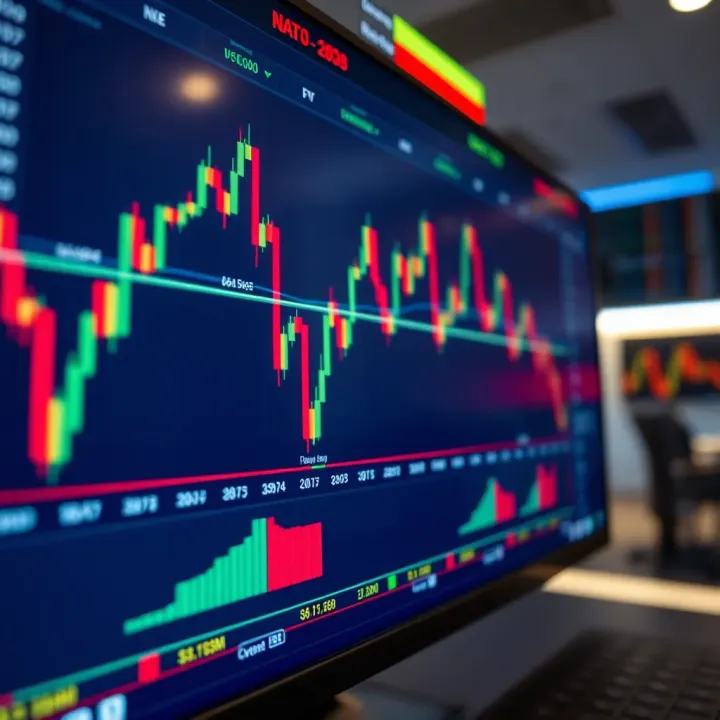
📈 Discover live forex trading essentials for the Indian market—explore tools, strategies, and risks in real-time currency trading with practical tips! 🇮🇳
Based on 7 reviews