

Octal to Binary Conversion Explained with Table
📊 Learn to convert octal to binary with an easy-to-use table! Ideal for students, programmers & digital electronics enthusiasts in India. 🚀
Edited By
Amelia Clark
Binary to decimal conversion is a basic yet essential skill, especially for those working with computers, electronics, and various financial technologies. The binary number system, based on only two digits — 0 and 1 — forms the foundation of digital computing. However, since we generally use the decimal system in daily life, understanding how to translate binary into decimal is crucial.
This section introduces you to the core idea behind binary numbers and explains how to convert them easily using a detailed table. Whether you're a student learning number systems, a trader analysing digital assets, or a financial analyst working with data technology, this knowledge can boost your understanding significantly.
Many trading platforms and financial software depend on binary data. Knowing how to read binary numbers and convert them to decimal allows you to verify, interpret, or even troubleshoot data outputs. For example, stock price streams, algorithmic trading inputs, or blockchain transaction IDs often work at the binary level in the backend.
Binary numbers use bits: each bit represents a power of two, starting from the rightmost bit as 2⁰ (which equals 1). Moving left, the bits represent 2¹, 2², 2³, and so on. A bit set to 1 means you count that power of two, while 0 means you skip it.
For instance, the binary number 1011 means:
1 × 2³ = 8
0 × 2² = 0
1 × 2¹ = 2
1 × 2⁰ = 1
Adding these gives 8 + 0 + 2 + 1 = 11 in decimal.
A binary to decimal table lists binary numbers alongside their decimal equivalents. It simplifies conversion by letting you quickly match or cross-check your results without manually calculating powers of two.
Keeping a conversion table handy speeds up learning and helps avoid errors, especially when dealing with longer binary sequences common in finance and computing.
Start from the right side of the binary number when using the table.
Use the table to learn common binary patterns quickly.
For longer numbers, group bits (like nibble groups of 4 bits) to make conversion easier.
Understanding this process will form the base for the detailed examples and tips covered in the next sections.
Understanding the basics of the binary number system is essential for grasping how computers process and store data. This section lays the foundation for binary to decimal conversion by explaining what binary numbers are, how they represent information, and why they differ from the decimal system we use daily.
Binary numbers use only two digits, 0 and 1, unlike the decimal system which has ten digits (0 to 9). Each binary digit, called a bit, has a place value depending on its position from right to left. The rightmost bit represents 2⁰ (1), the next 2¹ (2), then 2² (4), and so forth. For instance, the binary number 1011 represents:
1×2³ (8)
0×2² (0)
1×2¹ (2)
1×2⁰ (1)
Adding these up gives 8 + 0 + 2 + 1 = 11 in decimal.
This simple place value system allows computers to represent numbers efficiently using only two states, reflecting their electronic nature of on/off switches.
The decimal system, familiar to everyone, uses ten digits per place value increasing by powers of 10, such as units, tens, hundreds, and so on. In contrast, binary relies only on powers of 2. While decimal suits human counting habits, binary aligns perfectly with digital circuits where two discrete states—high voltage and low voltage—are easier to detect.
For example, decimal number 13 is 1101 in binary because:
1×2³ (8)
1×2² (4)
0×2¹ (0)
1×2⁰ (1)
This conversion demonstrates how the two systems relate, helping beginners bridge their existing number knowledge with binary concepts.
Digital devices like computers, mobiles, and even digital watches rely on binary because their hardware operates on two voltage levels. A transistor switch inside a processor is either on (1) or off (0). This makes binary a natural language for electronics.
Binary data is stored in memory chips and transmitted as signals in networks. Understanding this connection clarifies why binary is not just a numerical curiosity but the backbone of modern technology.
Binary is the core language of computers. Programmers often work with binary or its close variant, hexadecimal, to access hardware features, optimise code, or debug software. Understanding binary helps in grasping how instructions, file formats, or even colours are encoded.
For example, setting permissions on a Linux system involves binary flags. Also, knowledge of binary enables better understanding of data encryption, compression, and error detection techniques.
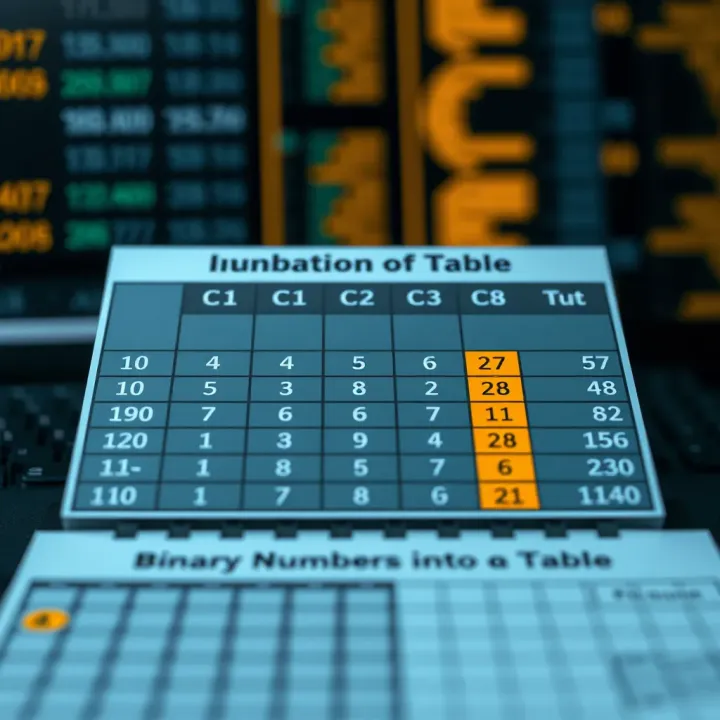
Though users interact mostly through graphical interfaces, binary silently powers everyday tasks—from checking mobile data usage to streaming movies on apps like Hotstar or Netflix. Digital payments via UPI or even sending WhatsApp messages involve binary data transmission through networks.
Learning binary equips you to appreciate how these processes work under the hood. It also simplifies learning advanced tech subjects, helping students and professionals alike.
Getting comfortable with binary enhances your technical literacy, empowering you to harness the full potential of digital tools around you.
Decimal numbers form the backbone of everyday counting and measurements. Unlike binary, which is a base-2 system, decimal is a base-10 system using digits from 0 to 9. Grasping how decimal numbers are structured and function helps in understanding the conversion from binary, especially since decimal remains the default system in most real-world scenarios.
Decimal numbers rely on the position of each digit to determine its value. Each place to the left of the decimal point represents powers of ten, starting from 10⁰ (ones), then 10¹ (tens), 10² (hundreds), and so forth. For example, in the number 3,782, the digit 3 stands for three thousand (3 x 10³), 7 for seven hundred (7 x 10²), 8 for eighty (8 x 10¹), and 2 for two units (2 x 10⁰).
This positional value system allows the decimal system to express large numbers efficiently. It’s practical because it matches how we count naturally, using ten fingers as the original counting tool. Understanding decimal positioning is crucial for converting binary, where place values are powers of two rather than ten.
Binary numbers use only two digits: 0 and 1, with each position representing powers of two instead of ten. While decimal 5, for instance, is 5 x 10⁰, in binary it is represented as 101, meaning (1 x 2²) + (0 x 2¹) + (1 x 2⁰). This fundamental difference means the place value rules vary between the two, requiring a clear understanding of decimal place values to successfully convert and interpret binary equivalents.
Moreover, binary is often less intuitive for those unfamiliar with computer science, whereas decimal is the default system for everyday use. Knowing these differences highlights why conversion tables and learning decimal values from binary digits matter.
We use the decimal system daily for money calculations, distance measurements, weight, and time. For example, when shopping, a price tag showing ₹1,299 is straightforward because we naturally understand the decimal system. From measuring kilograms in the market to reading temperatures in degrees Celsius, decimal's place-value system stays consistent and reliable across activities.
Without this common numbering system, daily transactions and communication would be confusing. It’s especially significant in trading and investing where numbers must be quickly understood and accurately processed.
Decimal numbers create a bridge between complex binary code and everyday comprehension. Non-technical users find it easier to handle decimal-based figures rather than raw binary digits. For learners, investors, or traders who want to grasp how computers store or transmit data, knowing decimal systems simplifies this complexity.
The familiarity of decimal makes educational tools, conversion tables, and calculators accessible and user-friendly. This helps demystify binary-to-decimal conversion and makes digital concepts tangible to a broader audience.
Understanding decimal numbers is not just about maths; it’s about connecting computer logic to real-world figures you use every day.
This foundational knowledge supports deeper learning and smooth conversion between systems, which is particularly useful in financial analytics, trading platforms, and programming tasks involving number systems.
Understanding how to convert binary numbers to decimal is essential, especially for traders and financial analysts who deal with digital data and computing systems. The binary system is fundamental to how computers and digital devices process information, and converting these strings into decimal makes the data easier to interpret and manage. This conversion helps in decoding machine-level information, analysing software outputs, or simply grasping how digital systems represent numbers.
Using place values of binary digits
Each binary digit (bit) has a specific place value, starting from the rightmost bit, which represents 2⁰, then moving leftwards to 2¹, 2², and so on. For example, in the binary number 1011, the bits represent:
1 × 2³ (8)
0 × 2² (0)
1 × 2¹ (2)
1 × 2⁰ (1)
These powers of two indicate the weight of each bit. This positional system is crucial because it shows how much each binary digit contributes to the overall decimal number. Without recognising place values correctly, the conversion results would be inaccurate.
Calculating the decimal equivalent
After identifying each place value, multiply the binary digit by its corresponding power of two and then add all the products. Taking the example of 1011 again:
(1 × 8) + (0 × 4) + (1 × 2) + (1 × 1) = 8 + 0 + 2 + 1 = 11
This simple multiplication and addition process yields the decimal equivalent quickly. Practicing this calculation improves accuracy and speed, which is particularly useful when you face complex or longer binary numbers.
Misinterpreting binary positions
A frequent error is mixing up the bit positions, such as reading binary digits from left to right instead of right to left when assigning place values. For instance, reading the binary number 1101 as if the leftmost digit is 2⁰ would lead to a wrong decimal result. Remember, the rightmost bit is always 2⁰, and each bit to the left increases the exponent by one.
Misreading these positions can cause incorrect valuations, especially in larger binary numbers where the difference in place values becomes significant.
Errors in addition or multiplication
Another common slip-up occurs during the calculation phase—mistakes like adding the wrong products or multiplying bits by incorrect powers of two. For example, multiplying a binary digit by 3 instead of 4 due to a misunderstanding of powers can throw off the final answer.
To avoid this, work systematically: list out each bit’s place value, perform multiplication accurately, and then sum all values carefully. Double-checking steps or using a binary to decimal table as reference can help catch errors early.
Clear and precise conversion from binary to decimal is vital to maintain data integrity and make informed decisions, especially when working in fields that rely heavily on digital computations.
Getting comfortable with these conversion techniques arms you to handle computer data better and bridges the gap between raw binary information and everyday numerical understanding.
Using a binary to decimal table can save you time and reduce errors, especially when dealing with long binary numbers. Such tables act as quick reference points, letting you directly match binary strings to their decimal counterparts without manual calculation. This is particularly useful for traders and analysts who handle digital data representations or students learning number systems.
The table is usually laid out with one column showing binary numbers and the adjacent column displaying their decimal equivalents. For example, binary strings from 0000 to 1111 (representing decimal 0 to 15) are often listed in ascending order. This structured layout helps users quickly scan and find the decimal value for a given binary input.
Larger tables extend this pattern further, sometimes including binary numbers with more digits to cover higher decimal values. The logical organisation makes it easier to spot patterns, like how each binary digit doubles the place value compared to the one on its right, reinforcing learning while simplifying lookup.
When reading the table, focus on the binary number as a string of 0s and 1s. Each position has a value doubled compared to the previous one to the right. For instance, 1010 corresponds to 8 + 0 + 2 + 0 = 10 in decimal. The table saves you from doing this math every time since you can just match the string to its decimal figure.
This quick cross-check is especially handy during analysis or in educational settings where accuracy and speed matter. By practising reading from the table, you eventually internalise the place values, making manual conversion smoother.
Start by ensuring you write the binary number with the correct number of digits, making it easier to find in the table. For example, if the table lists 4-bit numbers, pad shorter binary numbers with leading zeros. So, binary 101 is the same as 0101.
Scanning the table becomes straightforward once formats match. Try breaking longer binary numbers into blocks of four bits and converting each block separately, then adding the decimal results. This method helps manage bigger binaries gracefully.
Use the table not just for lookup but as a learning tool. Compare conversions side by side, observe the repeating patterns, and check your manual calculations against the table. Over time, this reinforces your understanding of binary place values and decimal sums.
In reference use, keep a print or digital version handy. Traders or analysts working with binary data can validate quick guesses or double-check conversions without switching to calculators.
Say you encounter binary 1101. Look it up in the table, and you find it equals decimal 13. Rather than converting manually, the table confirms this instantly. Such ease is valuable for students practising and for professionals needing quick verification.
Similarly, for binary 0011, the table shows 3 — straightforward for beginners getting familiar with the system.
For longer binary sequences like 10110110, split the number into parts like 1011 and 0110. Convert each using the table, getting 11 and 6 respectively, then multiply and sum considering place values: (11 × 16) + 6 = 182 in decimal.
This approach keeps conversion manageable even when numbers exceed the table, combining the simplicity of table reference with arithmetic skills.
Having a well-organised binary to decimal table at your fingertips not only speeds up your work but also deepens your grasp of how these number systems interrelate. Practice using the table often, and converting between binary and decimal will soon feel like second nature.
Using the right tools and resources can simplify binary to decimal conversion significantly. Whether you're a trader analyzing algorithmic patterns, a student practising number systems, or a financial analyst working with digital data, these tools save time and reduce errors. They provide support beyond manual calculations, especially for larger binary numbers.
Online conversion tools typically feature intuitive interfaces where you enter a binary number, and the decimal equivalent appears instantly. Some popular calculators also allow batch conversion and include explanations for each step, helping users understand the process better.
These apps often come with additional features like base conversions to octal or hexadecimal, making them versatile for multi-base computations. For example, an app may let you convert a binary string directly to decimal and then to hexadecimal, a function important in programming and financial data encoding.
Compared to manual calculations, these tools reduce human errors in addition or interpretation of place value. They are especially helpful when dealing with lengthy binary numbers, where manual conversion could be tedious and prone to mistakes. Online tools also save time, allowing quicker data analysis and decision-making.
For complex or repetitive conversions, relying on calculators or apps ensures accuracy and efficiency, freeing you to focus on interpreting results rather than crunching numbers.
Books on number systems provide detailed explanations and real-life examples which ground abstract concepts. Titles like "Fundamentals of Digital Electronics" feature chapters on binary and decimal systems, offering clarity with diagrams and practice problems. These resources suit those aiming for deeper understanding, such as students preparing for competitive exams or professionals brushing up their basics.
Practice worksheets, on the other hand, offer structured exercises to reinforce learning. They often start with simple conversions and progress to more challenging ones, including error spotting and correction tasks. Regular practice using these worksheets builds confidence and sharpens skills, making it easier to handle digital data operations.
Using these guides alongside digital tools creates a balanced learning approach. While calculators speed up conversion, educational materials build foundational knowledge, crucial for troubleshooting and applying these conversions contextually in finance, technology, or trading.
Together, online calculators, apps, and educational resources form a comprehensive toolkit. Leveraging them effectively can make binary to decimal conversion more accessible and reliable in your daily work or study.
📊 Learn to convert octal to binary with an easy-to-use table! Ideal for students, programmers & digital electronics enthusiasts in India. 🚀

🔢 Struggling with octal to binary conversion? This guide answers common questions, explains methods step-by-step, and offers practical tips for easy learning.
Learn how to convert decimal numbers to binary in C 📟 with clear steps, practical examples, and tips on handling edge cases for efficient coding.

Learn how to convert binary numbers to decimals with easy steps and clear examples. Master number systems and their role in computing! 💻🔢
Based on 8 reviews