

Intraday Trading Basics for Beginners
📈 Dive into intraday trading basics, strategies, and risk tips. Tailored for beginners in Indian markets seeking real, practical guidance.
Edited By
George Ellis
In intraday trading, choosing the right time frame shapes your entire approach and potential profits. Unlike long-term investing, where days or months matter, intraday trading demands decisions within minutes or hours. So, picking the ideal time frame isn’t just about convenience; it directly impacts how you spot entry and exit points, manage risks, and respond to sudden market moves.
The Indian market offers various time frame options—from 1-minute charts to 15-minute and even 1-hour intervals. Each serves different trading styles. For example, scalpers prefer 1-minute charts for quick trades, while others might use 5 or 15-minute frames for more balanced trades that allow some breathing room.

The interplay between time frame and trading strategy isn’t one-size-fits-all. It depends on your risk tolerance, trading goals, and even factors like liquidity and volatility in stocks listed on NSE or BSE.
Trade Frequency: Short time frames lead to multiple trades per day; longer intervals reduce trade numbers but can yield more reliable signals.
Risk Exposure: Smaller time frames demand quicker decisions but can be noisy, increasing false signals. Larger frames smooth out noise but delay reaction to price changes.
Technical Indicator Effectiveness: Indicators like RSI or moving averages behave differently depending on the time frame.
Suppose you are trading Reliance Industries shares using a 1-minute chart during market open. The price might fluctuate widely due to opening volatility, leading to many false signals. Switching to a 5-minute chart could filter this noise, helping you avoid premature exits or entries.
Understanding these nuances early helps you align your strategy with the right time frame, increasing your chances of consistent profits in the lively Indian intraday market.
Choosing the right time frame is essential for intraday traders because it directly impacts how they read the market and make decisions. The time frame determines the rhythm of trades—whether you enter dozens of trades in a day or focus on just a few high-quality ones. This choice affects not only your potential profits but also your stress level and time commitment.
For example, a trader working with a five-minute chart will see rapid price movements and may take quick trades every 30 minutes or so. On the other hand, a trader using an hourly chart might hold a position for several hours, waiting for a stronger price move. Picking an unsuitable time frame can mean missed opportunities or increased risk.
Shorter time frames like one or five minutes create a fast-paced environment where decisions have to be quick. Traders are constantly scanning for entry and exit points, often executing multiple trades within an hour. This high frequency suits those who can handle rapid decision-making and monitor the markets closely.
In contrast, longer time frames such as thirty minutes or one hour slow down the pace. Trades occur less often but tend to have more significant price movements and stronger signals. It allows traders to take more time analysing setups and reduces the impact of random market noise. This is helpful for traders who prefer a calmer approach or have other commitments during market hours.
The choice of time frame also shapes how a trader manages risk. With short time frames, price swings can be erratic, so stop-loss levels must be tighter to avoid large losses. For example, on a five-minute chart, a stop-loss might be just a few points away, accommodating minor fluctuations.
Meanwhile, longer time frames require wider stop loss areas to allow for the natural swings in price over a longer interval. This means the trader should plan position sizes accordingly to manage potential losses without risking too much of their capital. Proper alignment between time frame and risk parameters is vital in intraday trading.
These are the most popular time frames among Indian day traders. The five-minute chart captures quick price changes, ideal for scalpers or those who want several entry and exit opportunities during the day. The fifteen-minute chart balances pace and reliability, reducing some noise while still allowing multiple trades.
Practically, many traders watch the five-minute chart along with a fifteen-minute chart for confirmation. For instance, a trader might spot a short-term breakout on the five-minute chart but wait for confirmation on the fifteen-minute before entering a trade.
These longer charts are less noisy and show broader market trends within the trading day. Traders using these tend to be less active, taking one or two trades a day but aiming for bigger moves.
For example, during the volatile opening hour, a trader may spot a trend developing on the hourly chart and decide to hold a position through the morning session. This approach suits traders who prefer avoiding constant screen time but still want good profit potential.
Unlike time-based charts, tick charts plot price action after a set number of transactions (ticks). This can give a clearer picture of market activity, especially in busy Indian markets like NSE or BSE where volume spikes matter.
Tick charts help traders spot sudden bursts of buying or selling without waiting for time-based bars to complete. This can be useful in scalping or during news events where price moves fast. However, tick charts require practice to interpret correctly and may not suit all traders.
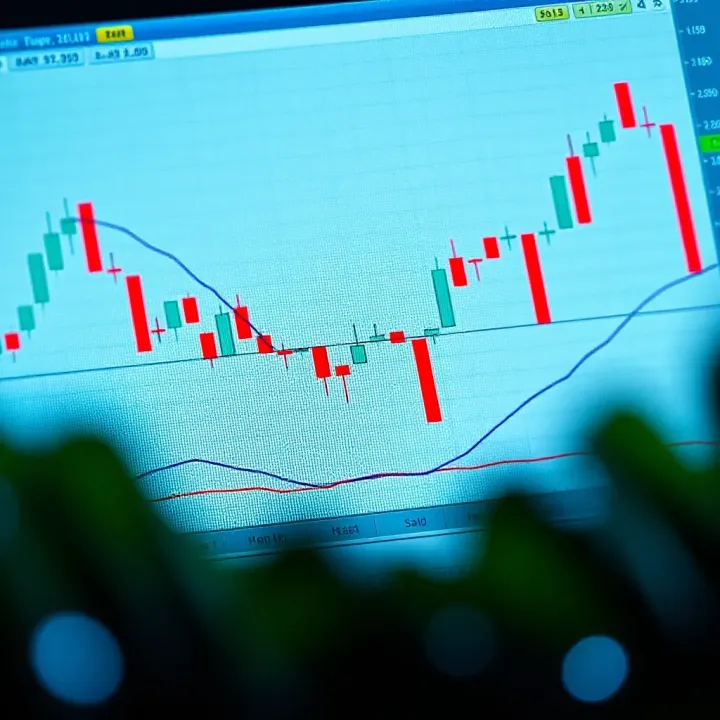
Selecting the right time frame tailors your trading strategy to your personality, risk appetite, and market conditions. It’s a small step that can make a big difference in your intraday performance.
Selecting the right time frame for intraday trading depends on several key factors. These elements influence how you interpret market movements, control risk, and match your trading style to actual conditions in Indian markets. Focusing on your experience, market behaviour, and available capital will guide you to a time frame that suits your goals and temperament.
For beginners, using slightly longer intraday charts like fifteen to thirty minutes can offer clearer signals and less noise. This helps new traders build confidence without feeling overwhelmed by rapid price swings seen in one to five-minute charts. For example, a trader just starting in NSE or BSE markets might find it easier to spot trends and confirm entry points on a fifteen-minute chart, avoiding knee-jerk reactions common with very short time frames.
Meanwhile, aggressive traders who thrive on fast action may prefer shorter intervals, such as one or five minutes. These time frames allow quick entries and exits, ideal for capturing small price moves multiple times a day. On the other hand, conservative traders often lean towards longer time frames, focusing on fewer trades with stronger conviction. A conservative trader might choose hourly charts to ride intraday swing moves cautiously, reducing exposure to market noise.
Indian markets are typically most active during the first and last hour of trading. Choosing a time frame aligned with these volatile sessions can improve trading opportunities. For example, traders using five-minute charts can exploit sudden price spikes after market open, while fifteen-minute charts might suit those favouring stability near closing hours when volumes surge.
Equally, economic announcements like RBI policy decisions, GST updates, or quarterly earnings increase market volatility. Traders must consider adjusting their preferred time frame during these events. Shorter intervals may provide quick chances to profit from sudden moves, but the risk of false signals also rises. Longer time frames can help see through noise and focus on more reliable trends during such periods.
The size of your trading capital should influence your chosen time frame. Larger positions often benefit from moderately longer time frames to manage risk better without rapid stops triggered by minor price fluctuations. For instance, a trader working with ₹10 lakh capital might use thirty-minute charts to give trades room to play out, avoiding premature exits.
Similarly, risk appetite ties closely with time frame choice. If you prefer to avoid frequent losses or stressful fast trades, longer time frames reduce the chance of impulsive decisions and frequent stop-loss hits. Conversely, risk-tolerant traders can embrace short time frames to capitalise on quick moves but need strict discipline. Adjusting your time frame allows you to balance position size and emotional comfort, essential for sustainable trading in the Indian context.
Knowing how your experience, market conditions, and capital size interact with time frame choices can dramatically improve your intraday trading results.
This careful consideration helps tailor your approach to intraday trading, making it practical and effective for real Indian market scenarios.
Choosing the right intraday time frame helps traders balance between fast decision-making and reliable signals. Different time frames suit different trading preferences, capital sizes, and market conditions. Understanding the pros and cons of popular time frames can prevent costly mistakes and improve trade timing.
Short time frames are attractive because they offer quick entries and exits, allowing traders to capture small price moves within minutes. For example, a trader watching a 1-minute chart on NSE might spot a rapid uptrend and enter a buy position, booking profits within a few minutes before the move reverses. This speed suits scalpers who want to turn over capital multiple times a day.
That said, short frames come with challenges. Market noise—random fluctuations unrelated to true trends—can cause false signals, leading to frequent losses. Traders can get easily stressed by the need to react instantly and endure losses from such noise. For example, a sudden spike in price on a 1-minute chart may trigger a premature buy, only to see the price drop the next moment. This demands sharp focus and quick reflexes.
Medium time frames offer a good balance between speed and reliability. A 15-minute chart smooths out much of the noise seen in shorter frames but still permits timely entries and exits during the trading day. This time frame works well for traders aiming to catch intraday swings without constant screen-watching.
Traders can also identify intraday swing opportunities using 15 or 30-minute charts. These setups often last several hours, giving traders room to manage risk effectively. For instance, a 30-minute chart might reveal a breakout forming just after the mid-morning volatile session in Bombay Stock Exchange (BSE), signalling a strong trend to follow for the day.
Longer frames are less sensitive to short-term market noise. An hourly chart can show genuine trends clearly, unaffected by erratic price jumps seen on 1 or 5-minute charts. This helps traders avoid the distraction of needless signals and focus on major moves.
However, trading longer frames means fewer trade setups. The trades taken usually have higher conviction and intended hold times until the session’s end or near to it. For example, a trader might enter positions based on the hourly chart trend after observing market sentiment post economic announcements like RBI rate decisions. These trades tend to require patience and larger stop-loss, but potentially better rewards.
Knowing the strengths and weaknesses of each intraday time frame helps you choose one that aligns with your style and risk tolerance. While shorter frames suit active scalpers, medium frames benefit swing traders, and longer frames suit those with patience and larger capital.
Technical indicators help traders understand market trends, momentum, and possible reversals across various time frames. The key is to match the indicator type with the chosen time frame to improve the reliability of signals and avoid confusion. For intraday trading, a short time frame might require faster-reacting indicators, while longer frames benefit from tools that smooth out market noise and confirm trends.
Short time frames like five or fifteen minutes demand indicators that respond quickly to price changes. Traders often use faster moving averages such as the 9-period or 14-period EMA (Exponential Moving Average) to capture timely entry and exit points. The Relative Strength Index (RSI) also needs adjustment; lowering the RSI period to 7 or 9 instead of the standard 14 makes it more sensitive to recent price moves, giving quicker overbought or oversold signals.
For example, during the first half hour of the market, a 9-period EMA crossing above a 14-period EMA on a 5-minute chart could indicate a buying opportunity. However, these fast signals require caution because they may produce false positives due to market noise.
Volume plays a critical role in confirming intraday price moves, especially on shorter time frames. Indicators like the Volume Weighted Average Price (VWAP) or On-Balance Volume (OBV) are useful for this purpose. VWAP, widely used by Indian traders, shows the average price weighted by volume and helps identify buying or selling pressure within the session.
Suppose a stock trades above VWAP with rising OBV on a 15-minute chart; it suggests strong buying interest and supports a bullish stance. Volume-based indicators often work well with low-latency strategies as volume surges can precede price moves, offering a quick edge.
Medium (15 to 30 minutes) and longer intraday frames benefit from indicators that provide trend confirmation rather than rapid signals. Bollinger Bands help identify volatility and potential price reversal zones by showing how far prices deviate from a moving average band with standard deviations.
For instance, if the price touches the lower band on a 30-minute chart and the Moving Average Convergence Divergence (MACD) shows a bullish crossover, this combination can confirm a reversal or buying opportunity. MACD is useful here due to its smoothing effect, reducing the noise seen in shorter frames.
Support and resistance levels on hourly or longer intraday charts carry more weight for traders. These zones represent historical price levels where buying or selling pressures dominated, and traders expect price reactions.
For example, if a stock approaches a strong resistance level identified on a 1-hour chart, intraday traders might tighten stop-losses or prepare for a breakout. These levels help in placing realistic target prices or stop-losses, making risk management effective for trades held longer than just a few minutes.
Aligning the choice of technical indicators with your preferred time frame enhances trade accuracy and helps maintain discipline by reducing impulsive decisions based on unsuitable signals.
Overall, adapting indicators to your time frame not only improves signal reliability but also syncs your trading strategy with market rhythms observed in Indian stock exchanges like NSE and BSE.
Choosing the ideal time frame is not just a one-time decision but a process of trial, observation, and adaptation. Testing different time frames allows traders to find a rhythm that fits their approach, emotional resilience, and market conditions. This section covers realistic techniques to identify a time frame that complements your trading style and objectives.
Before risking actual capital, paper trading offers a risk-free way to experiment with various intraday time frames. Recording your performance over days or weeks helps pinpoint which frame yields consistent profits and suits your decision-making speed.
Emotional comfort is as critical as the numerical outcome. For example, a trader might find the five-minute chart generating many trade signals, but if it causes stress or impulsive trades, a longer frame might be favourable. Keeping a journal of trading decisions, emotions felt during trades, and exit outcomes can reveal patterns about the best frame for your temperament.
Another key aspect is adjusting your test based on market hours and capital size. Suppose you have limited capital, favouring longer time frames might reduce transaction costs and exposure risk. Conversely, if you can trade actively during market open and close hours, shorter frames like 5 or 15 minutes could be more rewarding.
Market volatility dictates the effectiveness of your chosen time frame. During highly volatile sessions—like after RBI announcements or major economic data releases—shorter time frames help you capture fast price swings and exit quickly.
On quieter days, using longer time frames reduces the noise and prevents premature entries. For instance, a 30-minute chart can provide clearer trend direction when volumes drop mid-session. Adapting time frames like this helps avoid getting caught in false moves.
Effective traders keep their time frames flexible, matching the frame to the day’s rhythm instead of sticking rigidly to one.
One common pitfall is over-trading using very short time frames such as 1 or 2 minutes. These frames produce numerous signals, but many are mere noise, leading to excessive trades, higher costs, and emotional fatigue. For example, a trader chasing every tick might burn valuable capital without meaningful gains.
On the flip side, some traders lack patience on longer intraday frames like the 1-hour chart. They might exit trades too early, missing out on bigger moves simply because the trades develop slower. Intraday trading is often about endurance—making room for the market to unfold according to your chosen frame.
Practice discipline by selecting a time frame that you can follow consistently without emotional overload or hasty exits. This balance improves your chances of success much better than constantly switching frames on whims.
These practical tips guide traders in the Indian markets to align their time frames with their individual conditions and the fluctuating market environment. Paper trading, flexibility, and avoiding common traps play a major role in crafting a reliable intraday strategy.
📈 Dive into intraday trading basics, strategies, and risk tips. Tailored for beginners in Indian markets seeking real, practical guidance.

📈 Master intraday trading in India with our practical guide! Learn market basics, strategies, risk control & tools to trade confidently within the same day.

💹 Know the minimum amount needed for intraday trading in India, how margins and brokers affect it, plus tips on managing funds and risks wisely.

📈 Discover how to pick the right stocks for intraday trading in India! Learn key criteria, top stock traits, and smart strategies to trade confidently.
Based on 11 reviews